
The third seminar within the framework of the project European Culture(s) of Remembrance was held from 9 to 15 March 2026. Bringing together participants from ten European countries, the seminar introduced key aspects of Czech memory culture through structured discussions with local stakeholders and site visits to selected locations in Prague, Lety, Terezín, and Ústí nad Labem.
The project “European Culture(s) of Remembrance” is developed in cooperation between the European Youth Education and Meeting Centre in Weimar (EJBW) and the association Retrovizor from Zagreb. It is conceived as a series of international seminars hosted across different European countries, with a primary focus on the representation of the Second World War and contemporary history within local cultures of remembrance. In addition to these historical frameworks, particular emphasis is placed on the memorial and museological representation of national minorities and neighboring populations.
Following its launch in 2025 with seminars in Germany and Croatia, the initiative continued with a week-long programme in the Czech Republic, organized in cooperation with the Prague-based association Antikomplex. Building upon previous project activities, the seminar combined study visits, expert lectures, and discussions with local actors in the field of memory culture, while also fostering transnational exchange among participants.
The programme commenced on Monday, 9 March, with the arrival of participants in Prague and an introductory session aimed at facilitating mutual acquaintance. On Tuesday, 10 March, the seminar formally opened at the Emauzy Abbey with a presentation of the project’s conceptual framework and programme structure. This was followed by an introductory lecture delivered by Dr. Václav Sixta (Faculty of Arts, Charles University in Prague), who examined Czech memory culture through a tripartite analytical framework encompassing heroic narratives, nostalgia, as well as trauma and reconciliation.
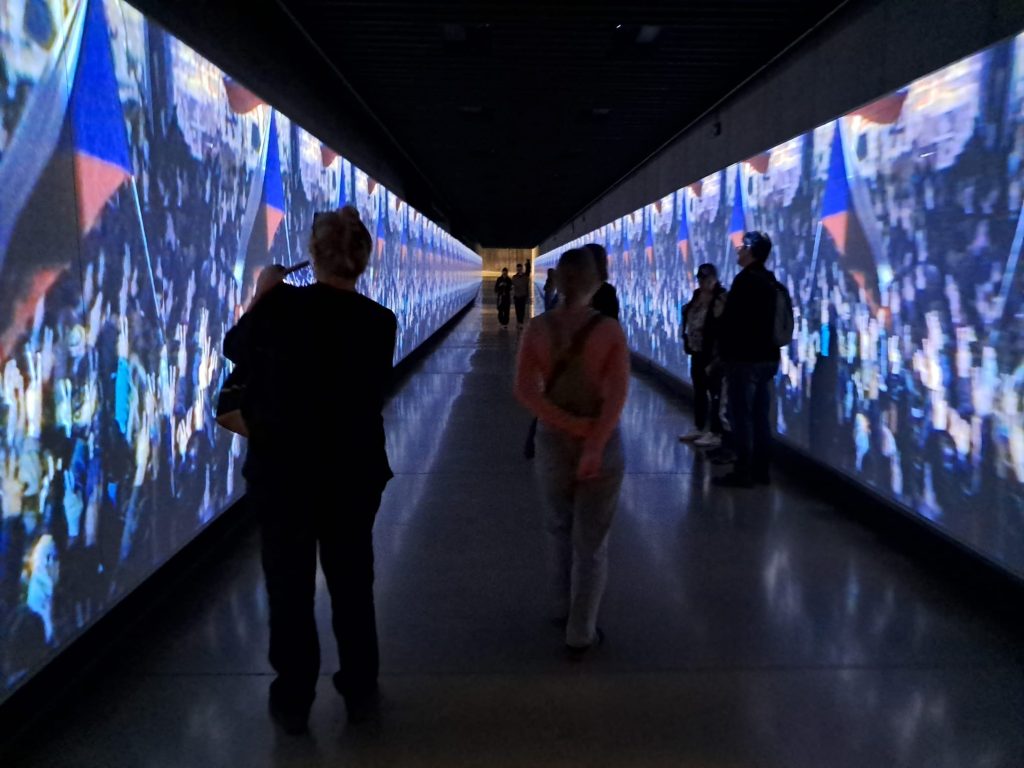
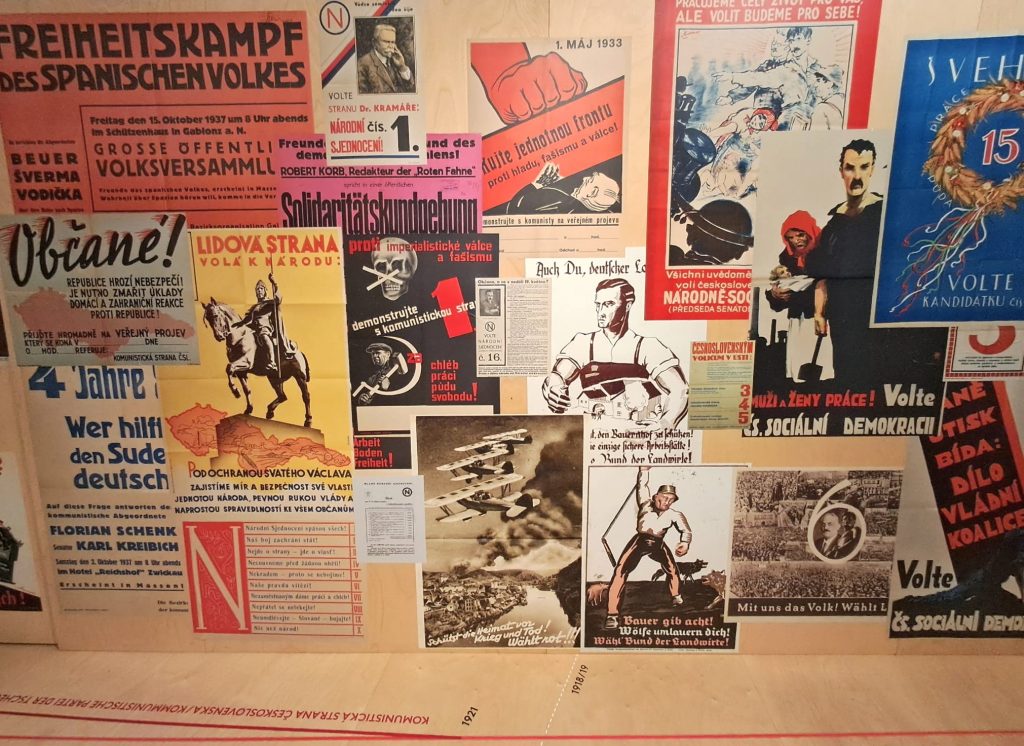
In the afternoon session, participants visited the National Museum located at Wenceslas Square, where they engaged with the permanent exhibition “History of the 20th Century“. The exhibition conceptualizes Czech history of the 20th century as a process of modernization characterized by ideological discontinuities and shaped by global historical events, notably the world wars.
Through its curatorial approach and selection of artefacts, the exhibition offered an engaging response to the question of how to present the history of the twentieth century in a museum. Notably, the exhibition incorporates numerous objects related to the history of everyday life, including holiday memorabilia, erotic magazines, and music posters, thereby broadening the scope of historical representation.

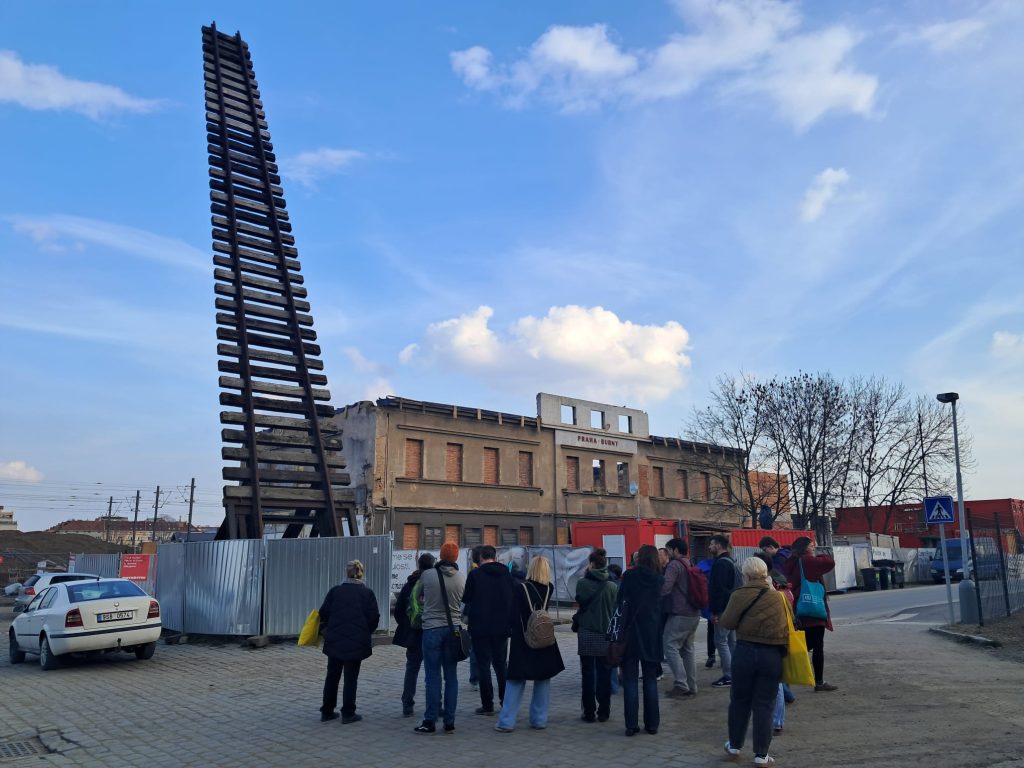
Subsequently, participants took part in a guided thematic walk through the Prague district of Holešovice, led by Thomas Elmecker (Antikomplex). The tour addressed the deportation of Prague’s Jewish population during the Second World War and examined sites of memory within the urban landscape. Particular emphasis was placed on transformations in memory culture from the wartime period to the present. The walk concluded at the Bubny railway station, the future site of the Prague Shoah Memorial.
On Wednesday, 11 March, the seminar continued in Písek with an introduction lecture about Lety Memorial. Established in May 2024, the memorial marks the site of a former internment camp for Roma during the Second World War. Historian Michal Schuster (Antikomplex) delivered a lecture on the history of Roma and Sinti in Czechoslovakia between 1918 and 1989, with particular attention to discrimination and violence before and during the Second World War.
The lecture was followed by a screening of the 2019 documentary Lety, which documents the prolonged efforts of activists and members of the Roma community to secure appropriate commemoration of the victims and to remove the pig farm constructed there in the 1970s. The initiative gave rise to prolonged public controversy; its eventual resolution—culminating in the removal of the farm and the establishment of the memorial—was achieved through a negotiated agreement between the Czech government and the site’s owners.
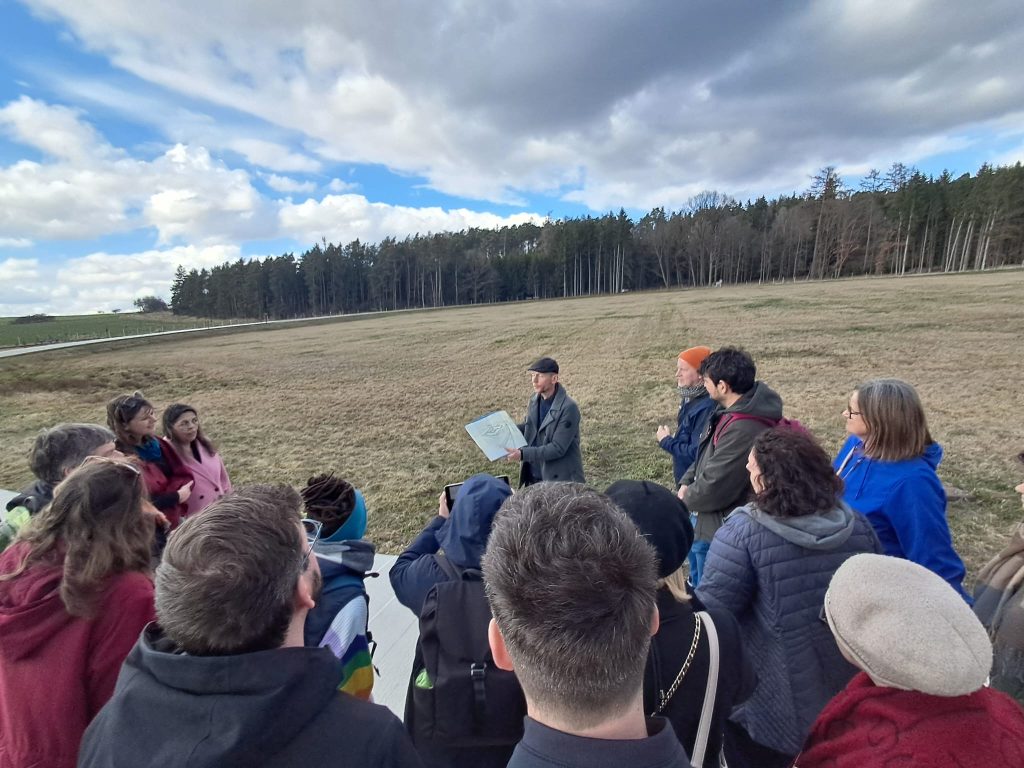
In the afternoon, participants visited the Lety Memorial. At the site’s entrance stands a bust of Čeněk Růžička, the late Roma activist with an outstanding role in advocating for the memorial’s establishment. After seeing the commemorative landscape and exhibition, the participants also engaged in discussion with Růžena Dordová, who provided a first-hand account of the long-lasting advocacy process and reflected on the contemporary social position of the Roma community in the Czech Republic.
On Thursday, 12 March, the seminar proceeded in Terezín, a small town transformed into a concentration and transit camp for Jews in November 1941. Participants visited the Ghetto Museum, part of the Terezín Memorial, where they examined exhibitions on daily life under conditions of confinement. A particularly strong impression on participants made the collection of drawings produced by children interned in the ghetto.
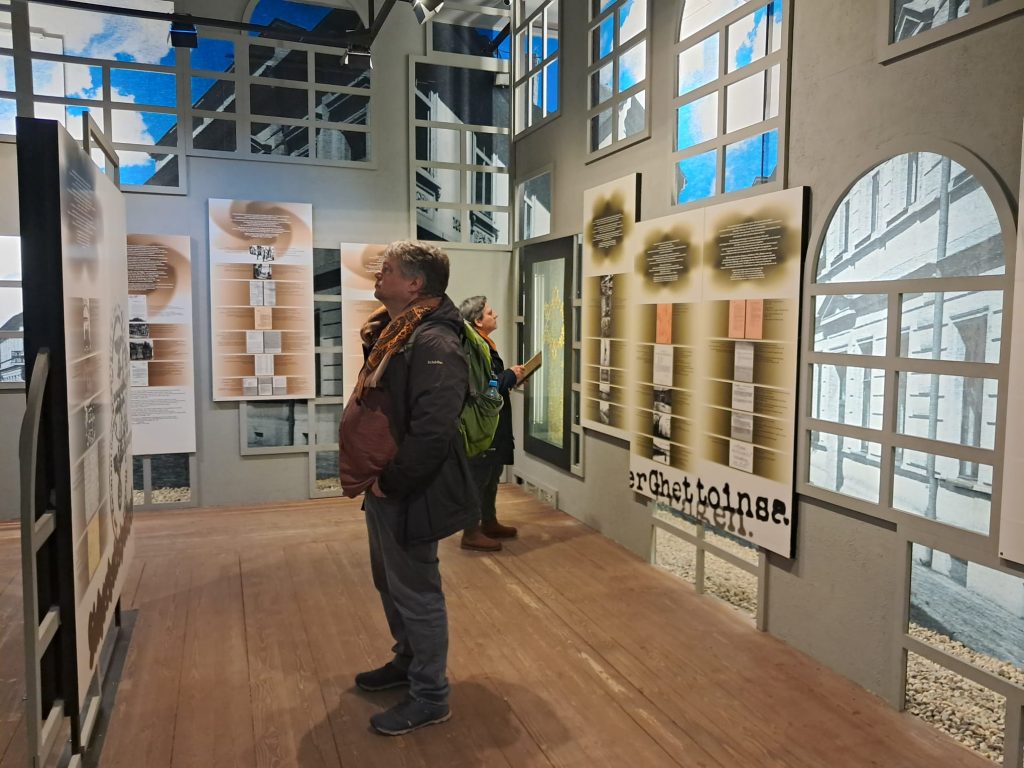
Following the visit, participants held discussions with museum curators Radana Rutová and Iva Rapavá, who presented plans for a new permanent exhibition scheduled to open in 2029 after a comprehensive renovation. The discussion also addressed public debates concerning the planned architectural extension of the museum and broader questions regarding the relationship between the memorial site, its visitors and the local community.
The evening programme included a screening of the Czechoslovak film The Long Journey (Daleka cesta, 1948), which depicts the persecution of Prague’s Jewish population during the Second World War. Produced shortly after the war, the film provides a layered representation of Czech society in pre-war and war period. Despite its initial release in 1949, it was soon withdrawn from Czechoslovakian cinemas. Therefore, the film remained mostly unknown to the broader audience until the political transformations of the early 1990s.
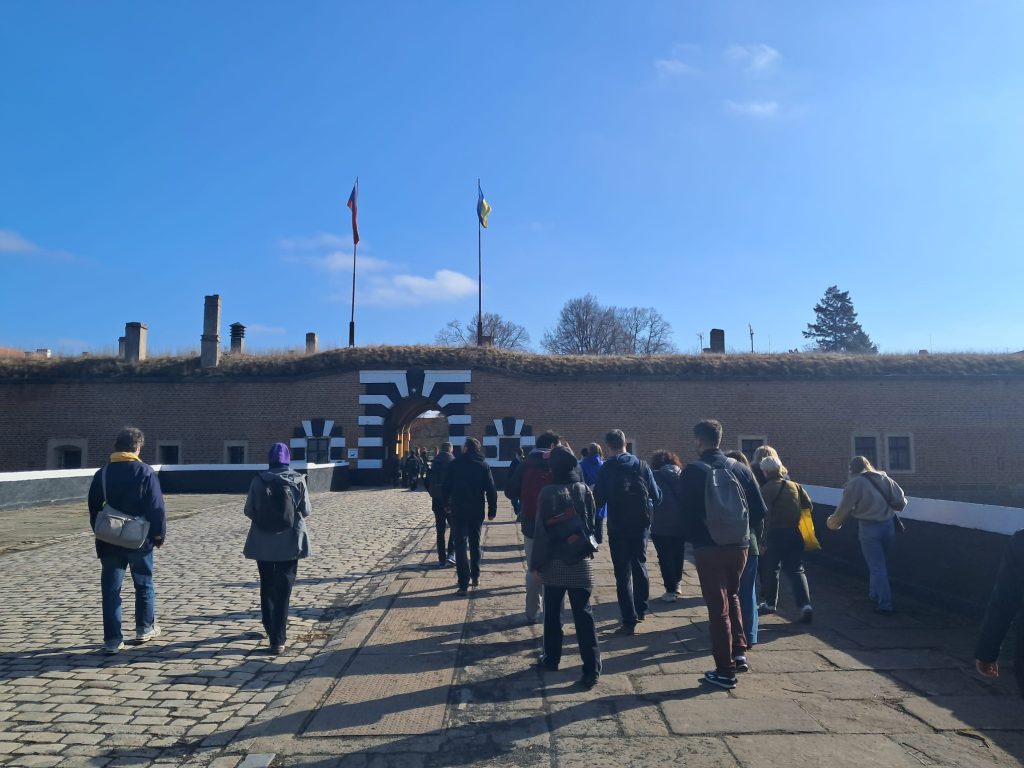
On Friday, 13 March, participants visited the Small Fortress in Terezín, a site that functioned as a detention and interrogation facility operated by the SS and Gestapo during the Second World War. One of the buildings within the Small fortress now hosts an exhibition on the history of Terezín under Nazi occupation.
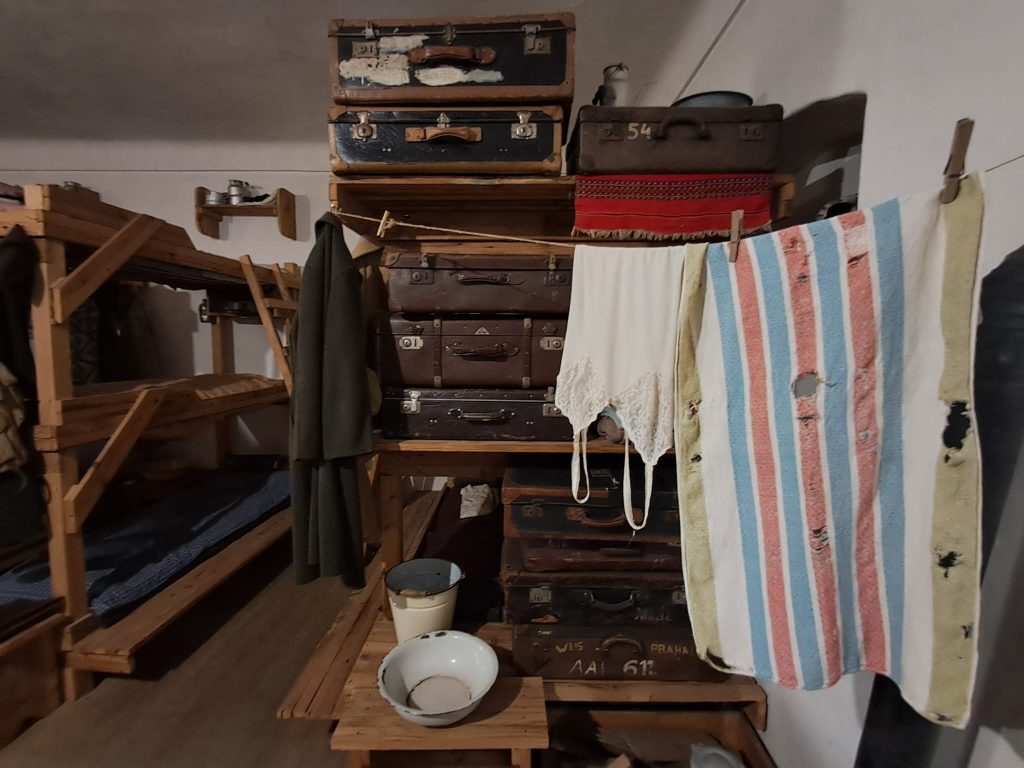
The programme continued with a visit to the Magdeburg Barracks, where participants examined a collection of artefacts created by ghetto inmates, including drawings, letters, poems, and wooden objects. A reconstructed dormitory provided insight into the overcrowded living conditions within the ghetto. While Terezín had approximately 7,000 inhabitants prior to the war, the prisoner population during the war in some periods exceeded 50,000. More than 150,000 individuals passed through the camp, of whom only a quarter survived until liberation in 1945.
The afternoon session addressed Czech-German relations. Professor Matej Spurný (Charles University, Prague) delivered a lecture on the historical presence of Germans in the Czech lands, focusing particularly on the post-war period marked by widespread violence and the expulsion of more than three million ethnic Germans. Although these events have long shaped bilateral relations, recent developments indicate a shift in public perception. This is exemplified by the planned hosting of the Sudeten German annual gathering in the Czech Republic in May 2026, marking the first such occurrence since the end of the Second World War.
On Saturday, 14 March, participants travelled to Ústí nad Labem, a border city from which the predominantly German population was expelled after the Second World War. Following an orientation walk, participants visited the exhibition Our Germans at the Regional Museum, which presents a multi-layered account of Bohemia’s multiethnic and multilingual history spanning eight centuries.
The seminar concluded on Saturday evening with a reflective session in which participants shared their final impressions. Departures followed on Sunday, 15 March. The seminar series, initiated in March 2025 in Germany, will continue with the event in Greece in October 2026.
The project “Europan Culture(s) of Remembrance” was conceived by Markus Rebitschek (EJBW, Weimar) and Dr. Boris Stamenić (Retrovizor, Zagreb) and is implemented with the financial support of the European Union and the Federal Republic of Germany. The successful implementation of the seminar in the Czech Republic was supported by financial contribution from the Czech-German Future Fund, as well as through the cooperation with Marie Smutna, Peter Sokol and other colleagues from the Antikomplex association.

Comments
One response to “European Culture(s) of Remembrance: Czechia in Focus”
[…] Follow the link to check the preliminary program and to find more logistic information regarding the upcoming seminar in Greece. In case of interest, check the reports from the earlier project events implemented in Germany, Croatia and Czechia. […]