
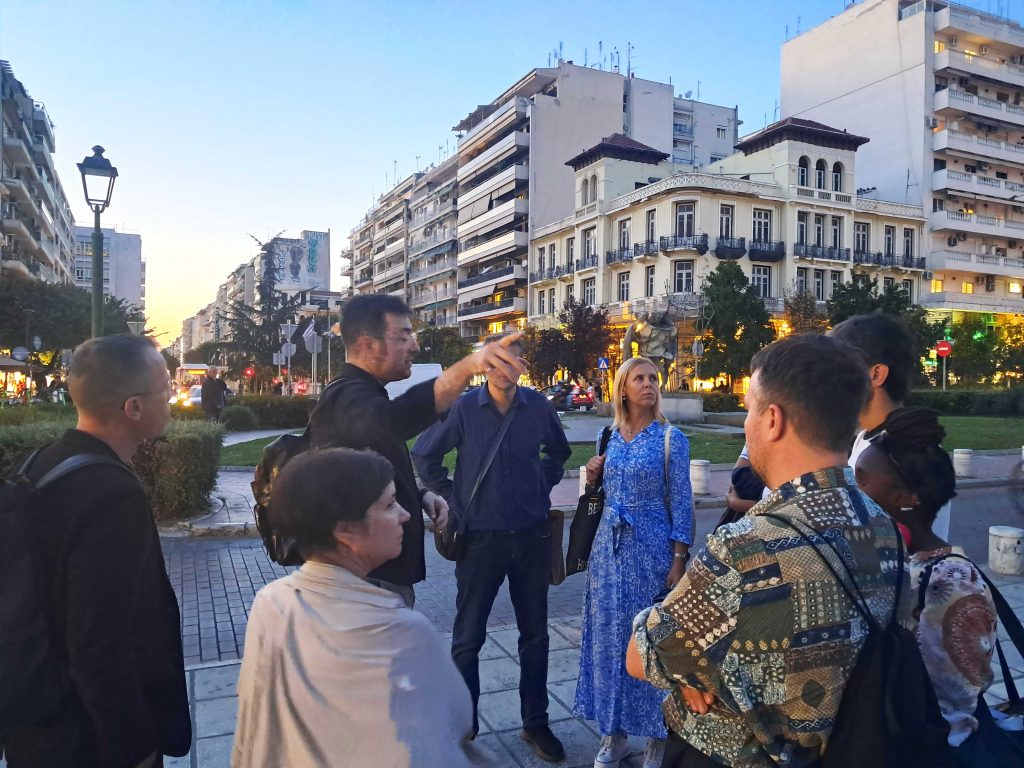
The fourth seminar in the “European Culture(s) of Remembrance” project took place in Greece from 3 to 9 October 2026. The six-day programme featured visits to historical sites and discussions with a range of local stakeholders in Thessaloniki and the surrounding area, offering insights into an outstanding landscape of remembrance shaped by the interplay of local, national and European histories.
The “European Culture(s) of Remembrance” project comprises a series of international seminars held in various European countries. Its focus is on the public representation of the past within local cultures of remembrance. Particular attention is paid to the presentation of twentieth-century history in museums and at memorial sites, as well as to the representation of national minorities and neighbouring peoples in local cultures of remembrance.
The project was conceived through a collaboration between the European Youth Education and Youth Meeting Centre in Weimar (EJBW) and the Zagreb-based association Retrovizor. The series began in 2025 with seminars in Germany and Croatia, and continued in March 2026 with a seminar in Czechia, organised in cooperation with the Prague-based association Antikomplex. The seminar held in Greece in early October 2026 was organised jointly with Demotrust, an association based in Thessaloniki.
The programme began on Saturday, 3 October, with a group dinner and an opportunity for participants to get to know one another in Thessaloniki. The following morning, the programme continued on the campus of Aristotle University of Thessaloniki.
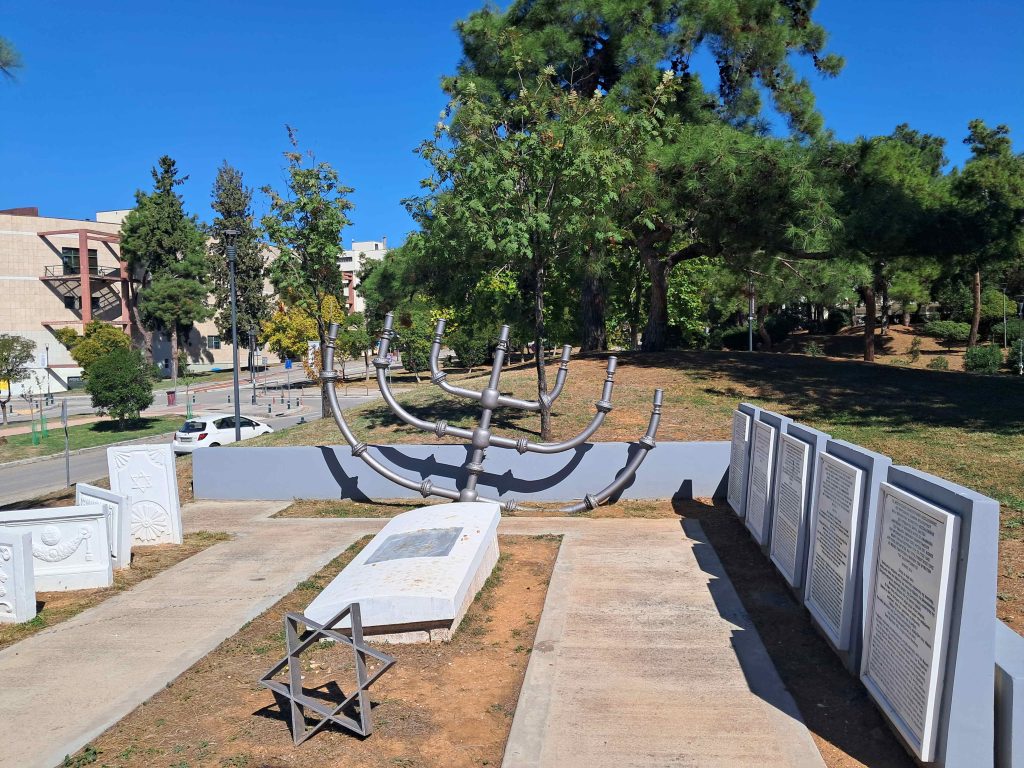
The extensive campus of Greece’s largest university, which currently has around 88,000 students enrolled, was built on the site of the former Jewish cemetery of Thessaloniki. Burials had taken place there since the late fifteenth century. The destruction of the cemetery, where nearly half a million people had been buried over the centuries, began during the interwar period. Most of the site was destroyed during the Nazi occupation of Thessaloniki in the Second World War.
On Sunday morning, 4 October, the programme continued with an introduction to the project’s concept and the seminar schedule. “Unlike the previous seminars, in which we combined two or more locations, this time we decided to hold the entire programme in Thessaloniki,” explained Boris Stamenić, programme coordinator of the “European Culture(s) of Remembrance” project. “Thessaloniki is an extremely important city, not only for understanding Greek history, but also for the history of Sephardic Jews and the Byzantine and Ottoman Empires. The city is also significant in terms of Greece’s relations with its northern neighbours and was an important cultural centre in the history of Southeast Europe. Furthermore, local culture of remembrance reflects the history of the First and Second World Wars, as well as Greece’s more recent history. For all these reasons, we decided to devote the six seminar days to exploring Thessaloniki and its immediate surroundings,” Stamenić explained.
This was followed by an introductory lecture on Greek culture of remembrance by Alexandros Poulakis, a doctoral researcher in the Department of Public Policy at Aristotle University of Thessaloniki. He distinguished between major historical topics on which there is broad social consensus in Greece’s public sphere and those that continue to polarise society. In descending order, the latter included the Greek Civil War (1946–1949), the occupation and resistance (1941–1944), the military dictatorship (1967–1974), the Turkish invasion of Cyprus (1974), and the dispute over the name and historical heritage of Macedonia.
Poulakis emphasised that in Greece, attempts to resolve sensitive foreign-policy issues through political compromise often result in the politicians involved being branded “traitors”. Consequently, members of the executive branch frequently avoid addressing such issues while in office, leaving conflicts with neighbouring countries unresolved for decades.
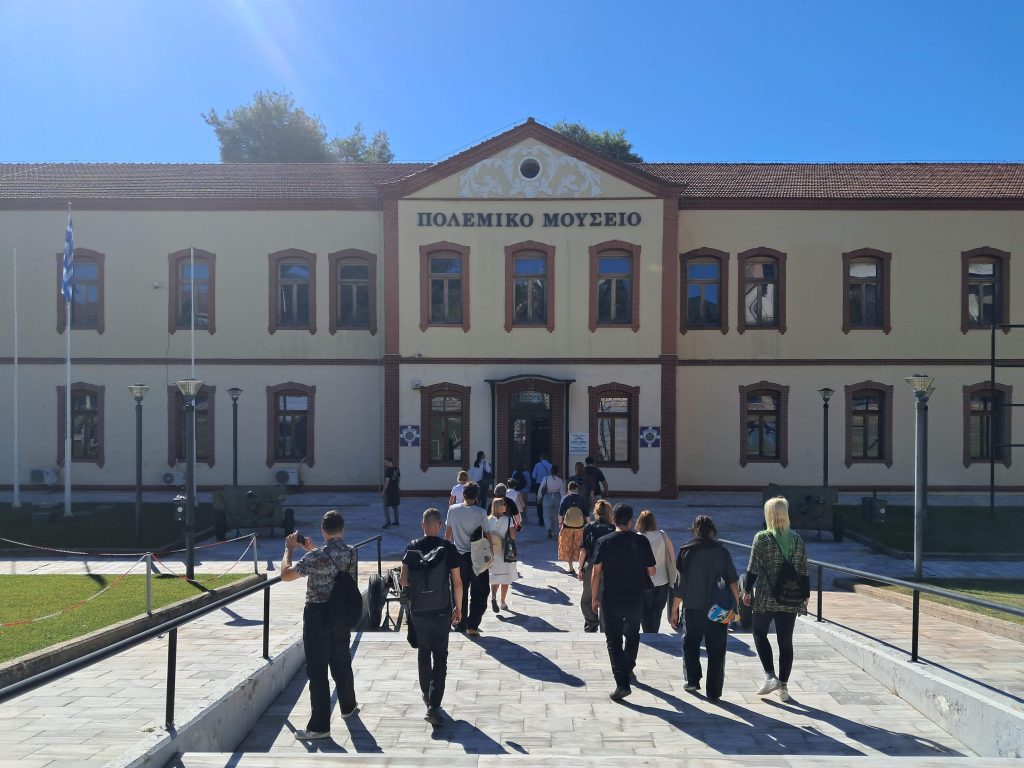
A visit that afternoon to the War Museum, which opened in 1975, offered insights into the Hellenic Republic’s official presentation of Greek (military) history. The permanent exhibition was presented by a Greek conscript who was completing the final weeks of his one-year compulsory military service at the museum. Focusing primarily on military uniforms, weapons and equipment, the exhibition covers the period from the beginning of the Greek War of Independence (1821–1832) to contemporary deployments of the Greek armed forces under the auspices of the United Nations and NATO.
The greater part of the museum is devoted to the Second World War. Exhibits include military equipment and personal belongings of Greek, German, Italian and Bulgarian soldiers, as well as objects belonging to prisoners of war and forced labourers. Another exhibition in the basement is dedicated to Sofia Vembo, a well-known Greek singer who spent the Second World War in West Asia alongside members of the Greek army in exile.
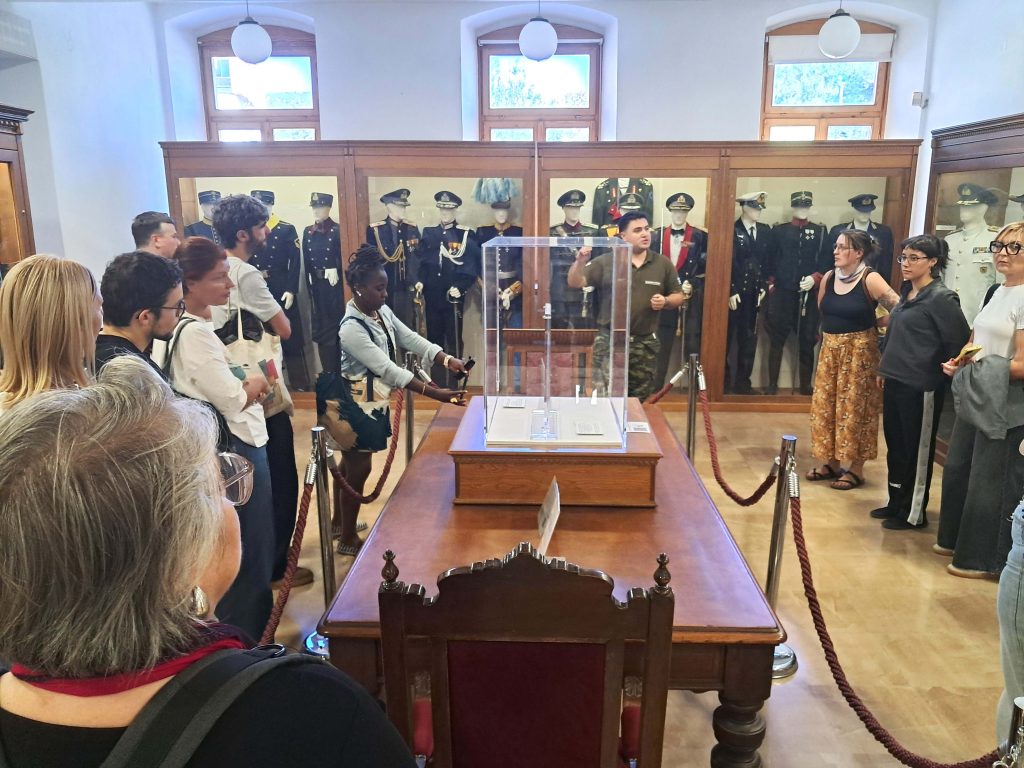
The seminar participants also visited an exhibition on the Greek military dictatorship (1967–1974), which focuses in particular on the role played by members of the armed forces in resisting the junta. Resistance within the Greek officer corps was particularly evident in May 1973, when the entire officer crew of the destroyer HS Velos (D-16), under the command of Captain Nikolaos Pappas, defected to Italy. Through this action, they drew international attention to the dictatorship imposed by Greece’s military junta.
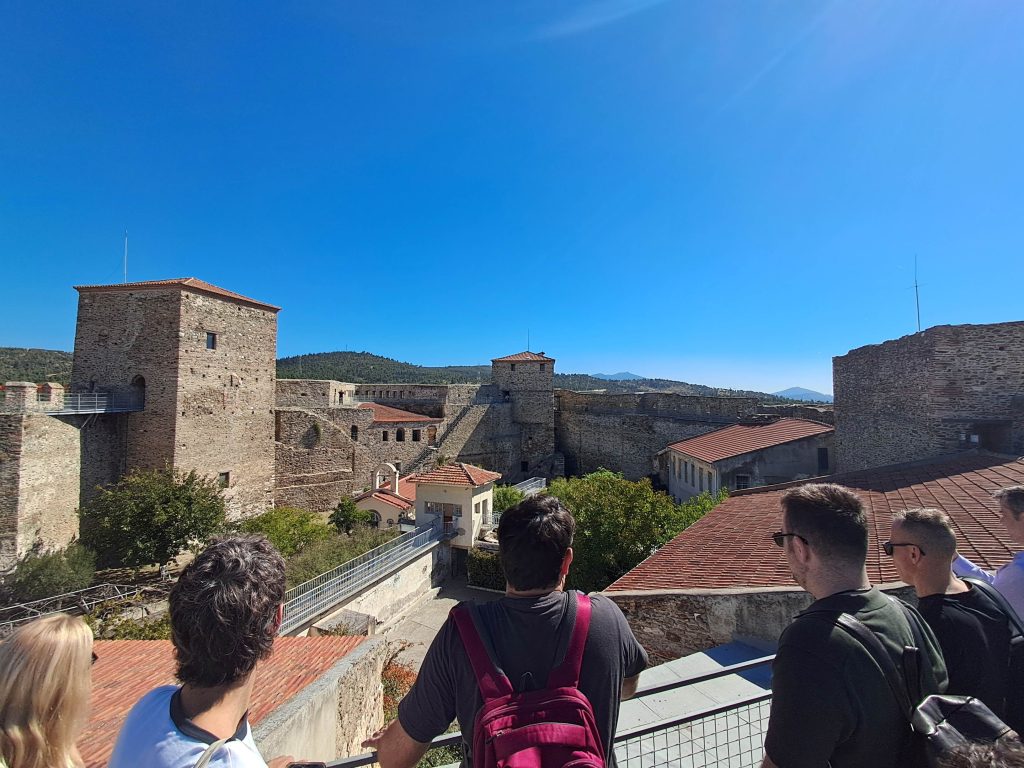
The following morning, the seminar participants set off on foot for Heptapyrgion Fortress in the historic Ano Poli district. Situated above the city, this fortification, whose construction began in the fourth century, served as a prison from the late nineteenth century until the late twentieth century. During the 1930s and 1940s, numerous political prisoners were incarcerated there.
During the seven-year rule of Greece’s military junta (1967–1974), Heptapyrgion was once again used as a detention facility for political prisoners. Following the fall of the junta and the beginning of Greece’s democratic transition, all political prisoners in the country were released. However, the prison remained operational until 1989. After the closure of the jail the responsibility for the whole site was transferred to the Greek Ministry of Culture.
The afternoon programme continued with a visit to the impressive Museum of Byzantine Culture, which opened in 1994. The museum presents the history of the Byzantine Empire through 3,000 objects displayed in eleven exhibition galleries. The second seminar day concluded with a boat trip, during which participants explored the city’s coastline and harbour from the water.
Following a morning discussion of the previous day’s impressions and topics, the seminar continued on Tuesday, 6 October, with a visit to the Jewish Museum of Thessaloniki. During a two-hour guided tour and subsequent independent exploration of the exhibition, participants learned about the history of Thessaloniki’s Jewish population, the Judeo-Spanish language Ladino spoken by the community, and its social position over the centuries. Particular attention was paid to the Second World War, when almost the entire Jewish population of Thessaloniki was deported and murdered by the German occupying forces and their collaborators.
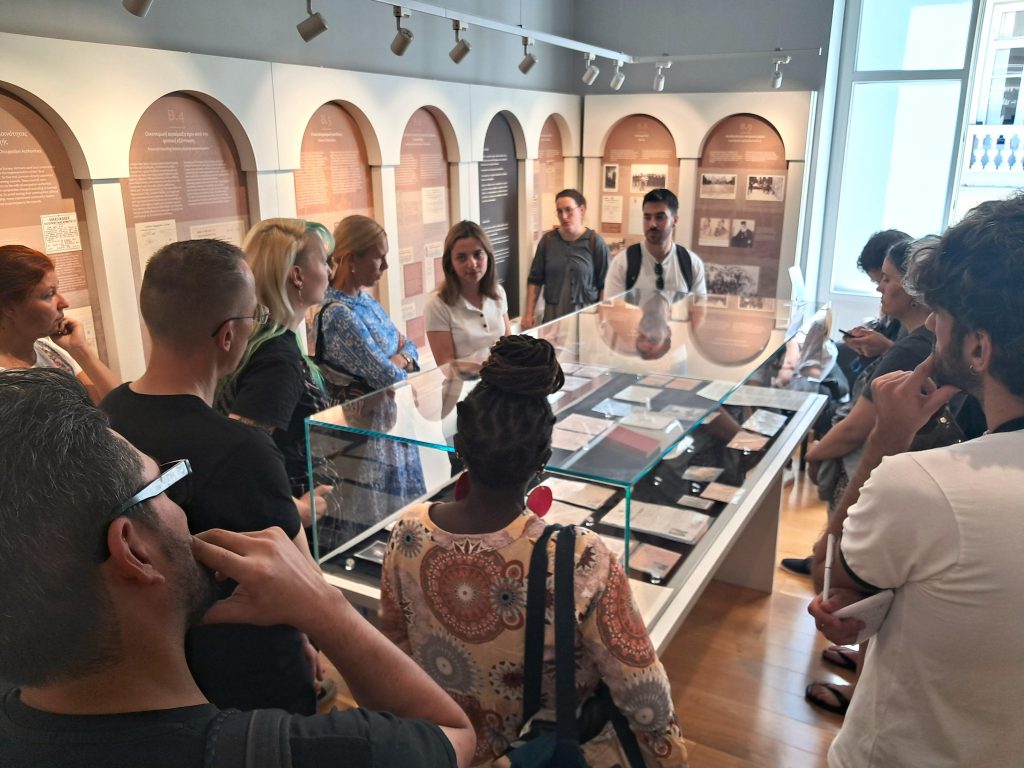
The afternoon program began with a joint reflection on the museum visit and an exchange of impressions. Participants agreed that the museum had made a profound impression on them and praised the wealth of information provided during the expert-guided tour. Before dinner, a thematic walking tour of the city centre followed, taking in several historically significant buildings and modern monuments. Led by Fotis Kizakis, executive director of the Demotrust association, the tour once again demonstrated how deeply the traces of Thessaloniki’s 2,400-year history are embedded in the city’s public space.
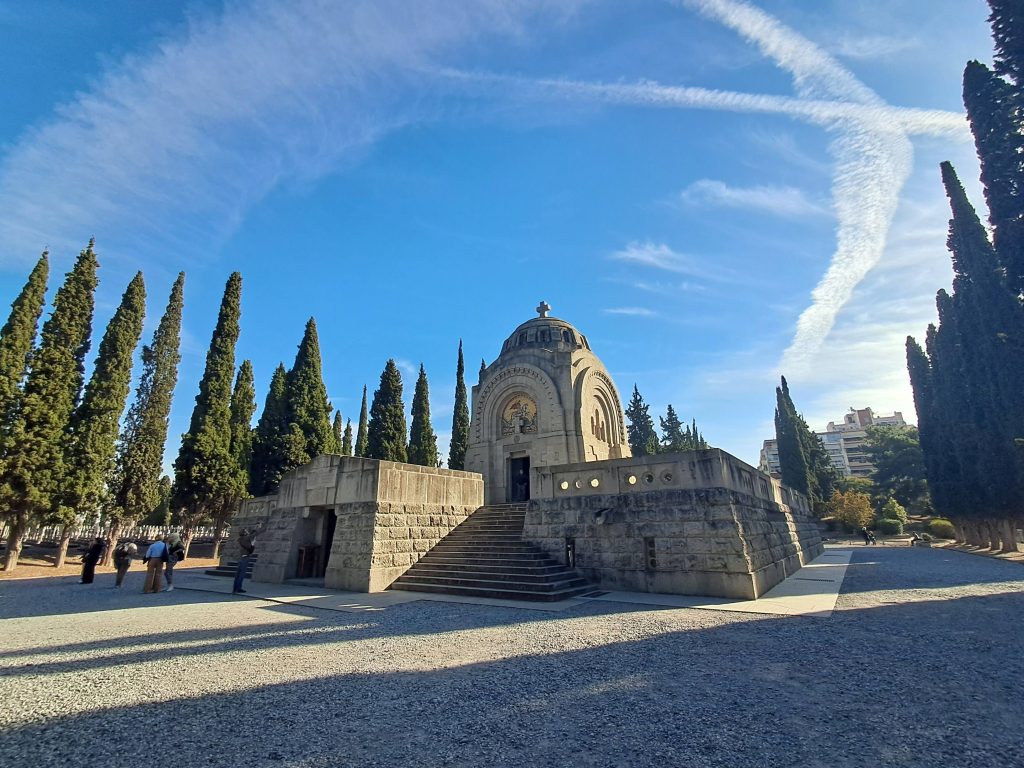
On Wednesday, 7 October, the programme featured a full-day bus excursion to several historical sites. The excursion began with a visit to a military memorial cemetery. Following the First World War, the remains of more than 20,000 members of the French, Serbian, Italian, British, Russian and Greek armed forces had been transferred there. After an introduction to the history of the site, participants visited the mausoleum built in the Serbian section of the cemetery during the 1930s.
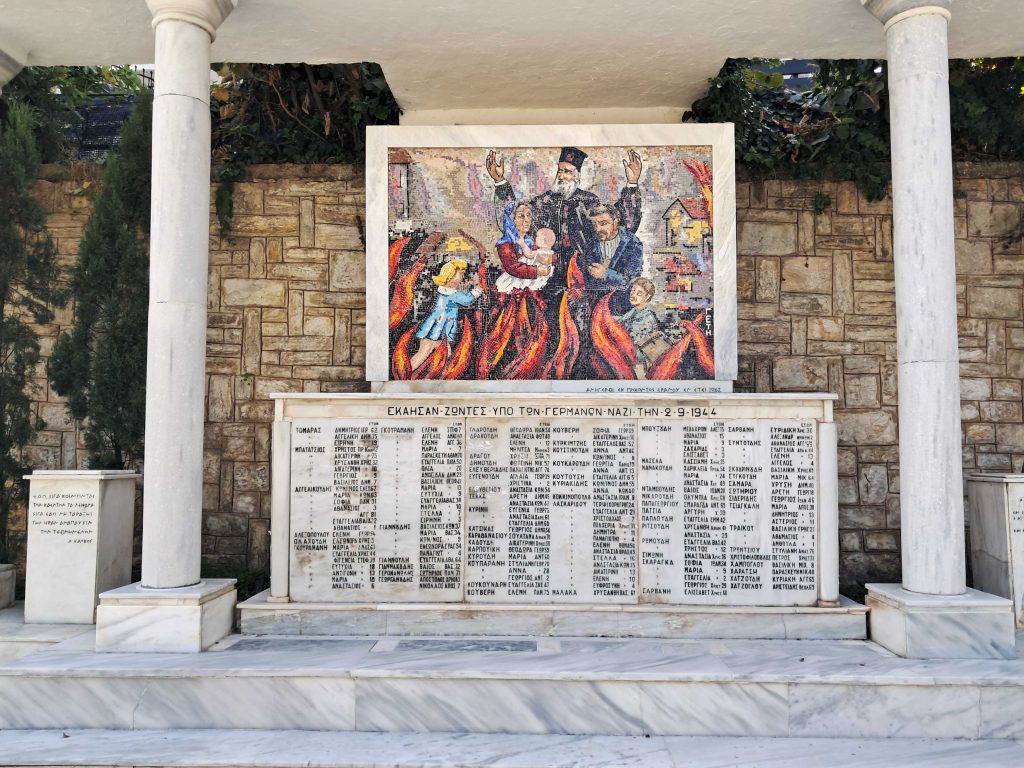
The group then travelled to Chortiatis, a village on the slopes of the mountain of the same name, south of Thessaloniki. The village is widely known for the massacre of 146 residents carried out by the German Wehrmacht, with the support of a pro-Nazi Greek militia known as the Security Battalions, on 2 September 1944.
The execution of almost entire population of Chortiatis was a reprisal for a guerrilla attack by the Greek People’s Liberation Army (ELAS) against German units near the village earlier that morning. The atrocity is commemorated by a monument erected in 1960 bearing the names of all the victims. Memorial plaques also mark two locations in the village where civilians were forced into houses and burned alive.
On the return journey to Thessaloniki, the bus made a brief stop in the small town of Vassilika. There, the group visited a newly erected monument commemorating the victims of the massacre associated with the Battle of Vassilika in June 1821. Representatives of the Municipality of Thermi, to which Vassilika now belongs, together with sculptor and monument designer Georgios Tsiaras, presented the monument and explained its significance to the local community.
The monument commemorates the heroic resistance and tragic deaths of the soldiers and civilians. During the fighting near the present-day settlement in June 1821, Greek insurgents stopped the advancing of the Ottoman troops from the north who sought to prevent the Greek revolutionaries from advancing further. Aside from fallen soldiers, many local civilians lost their lives after fleeing too late from the advancing Ottoman forces.
In the afternoon, the programme continued in Kalamaria, a former settlement of Greek refugees that is now one of the districts in southern Thessaloniki. Eleni Ioannidou, a researcher and archivist at the Historical Archive of Refugee Hellenism presented the archive’s main areas of work. These include preserving cultural heritage, researching the history of Greek refugees, and communicating their historical identity to the public.
During a walking tour of Kalamaria, Ioannidou showed participants locations of particular importance to the local history of refugees, many of which are now barely visible in public space. The archive’s work was then presented in greater detail during a session at the municipal premises. Participants gained insights into the thematic focus and scope of the materials held in the collection.
On Thursday, 8 October, the seminar programme continued in Kalamaria, this time at the cultural centre OkThess!. During a reflection on the previous day’s bus excursion through Thessaloniki and its surroundings, it became clear how deeply the visits had affected the participants and how many questions they had raised.
In smaller groups, participants discussed the role played by particular historical topics in the cultures of remembrance of their respective countries and how these topics are interpreted. Considerable differences emerged in the approaches to and relative emphasis placed on historical subjects, including the importance attributed to the First World War in different national cultures of remembrance.
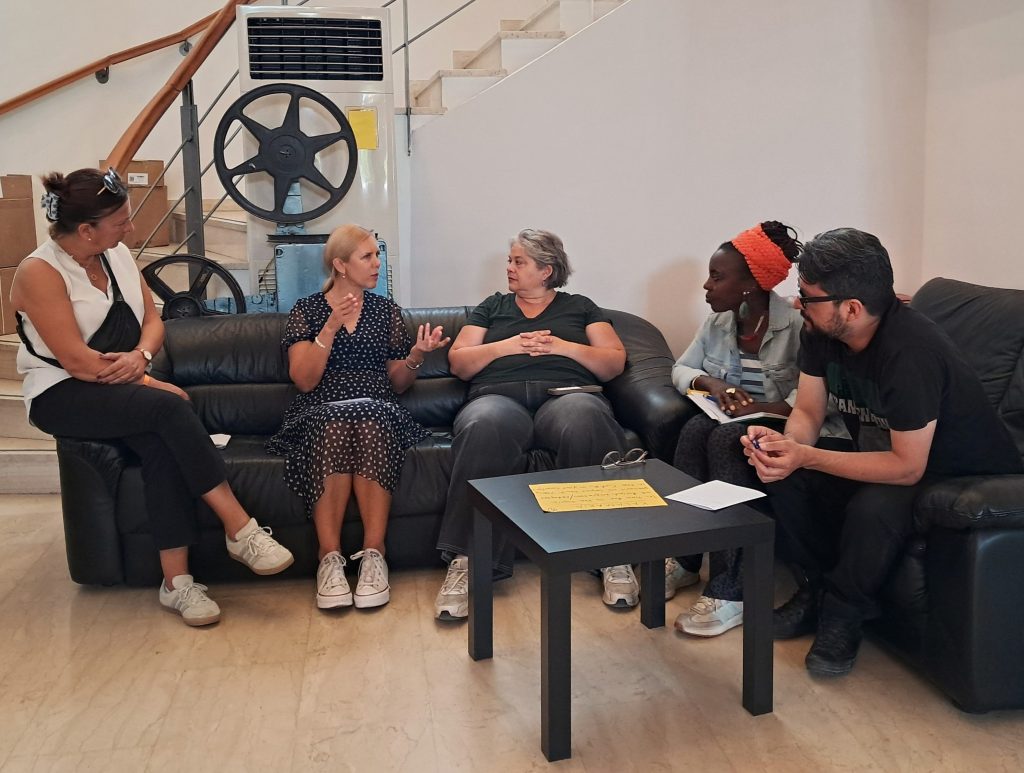
The afternoon of the final programme day provided an opportunity to bring together and reflect on the impressions gathered over the preceding days. The experiences and ideas gained during the seminar raised further questions while also opening up new perspectives on the cultures of remembrance in the participants’ home countries.
Participants expressed satisfaction with the diversity of the programme, which had given them valuable insights into numerous topics relevant to the culture of remembrance in Thessaloniki and Greece. Before the concluding dinner, they took the opportunity to enjoy one more short walk through Thessaloniki, bidding farewell to this fascinating and inspiring city on the northern coast of the Aegean Sea.
The “European Culture(s) of Remembrance” project was conceived by Markus Rebitschek (EJBW, Weimar) and Dr Boris Stamenić (Retrovizor, Zagreb). It is carried out with financial support from the European Union and the Federal Republic of Germany.
The seminar in Greece was supported by the Municipality of Thessaloniki, the Municipality of Thermi and Aristotle University of Thessaloniki. The colleagues from the Demotrust association — Fotis Kizakis, Alexandros Poulakis and Eva Zisi — made a substantial contribution to the successful preparation and implementation of the seminar program through their commitment and dedication.
Information about next project activity planned for the Spring 2027 is expected to be published by the end of 2026.
