
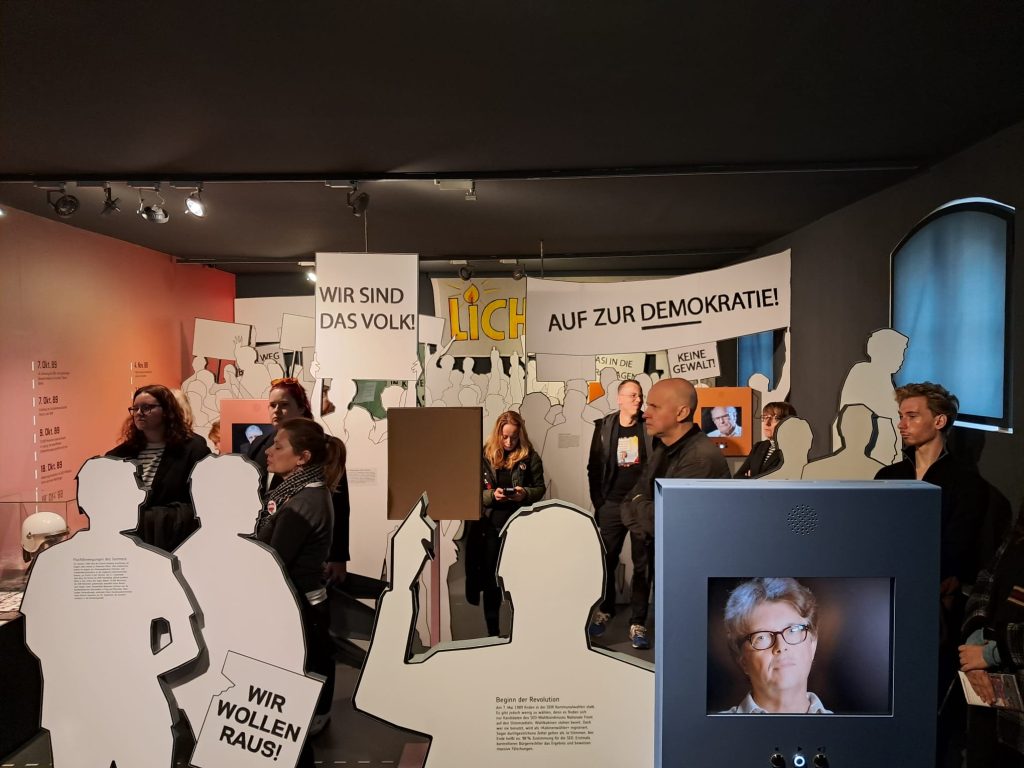
The project “European Culture(s) of Remembrance” is consisting of six international events in six European countries. The 1st project event took place in Germany from 21st to 27th of March 2025.
The events in the frame of the project “European Culture(s) of Remembrance” are combining study-visit with exchange and networking among professionals related to the field of historic-civic education. Through the intensive dealing with different topics related to a culture of remembrance and a historic-civic education, the events provide a valuable insight into contemporary social and political dynamics in each visited country. Thereby an active exchange among participants from all over Europe is contributing to the comprehension of related trends in other European countries as well as to the individual reflection about contemporary dynamics in own country. The insights gained during the events are supposed to encourage the participants to try out some new innovative methods in their professional work. Likewise, the learning and networking among participants should contribute to the planning of their future activities. The foreseen implementation-period of the project is 2025-2027.
The 1st project-event gathered 25 participants from 13 European countries in Germany. Following the project-idea, the event has provided not only the insight into major topics in the German culture of remembrance, but also into topic related disputes and controversies. The first part of the event took place in the region of Thuringia (Thüringen). Following the arrival of participants to the European Youth Education Centre in Weimar (EJBW), the getting-to-know-each-other activities as well as introduction into the project-topic marked the beginning of the event.
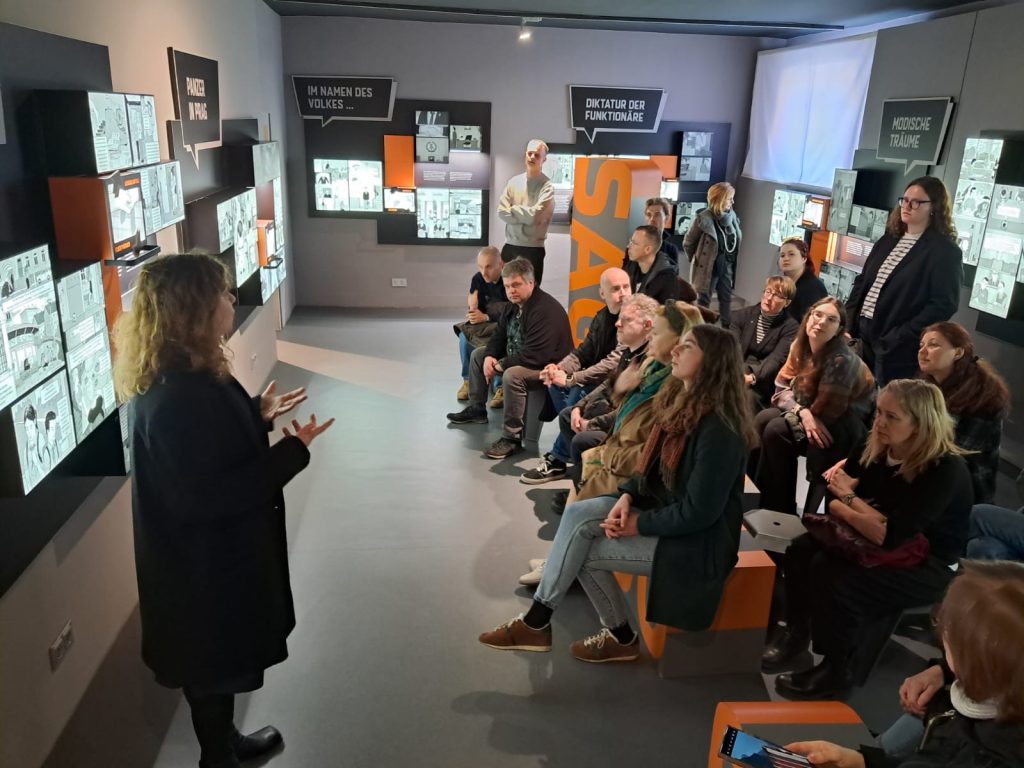
On Saturday, March 22nd, the group has visited the Museum of Forced Labor under National Socialism, opened in May 2024 in Weimar. The guided tour through the exhibition provided a good starting point for the later discussion with the director of the museum, Dr. Daniel Logemann, about the public perception of the exhibition and more general questions about the visibility of the topic of forced labor in the German culture of remembrance.
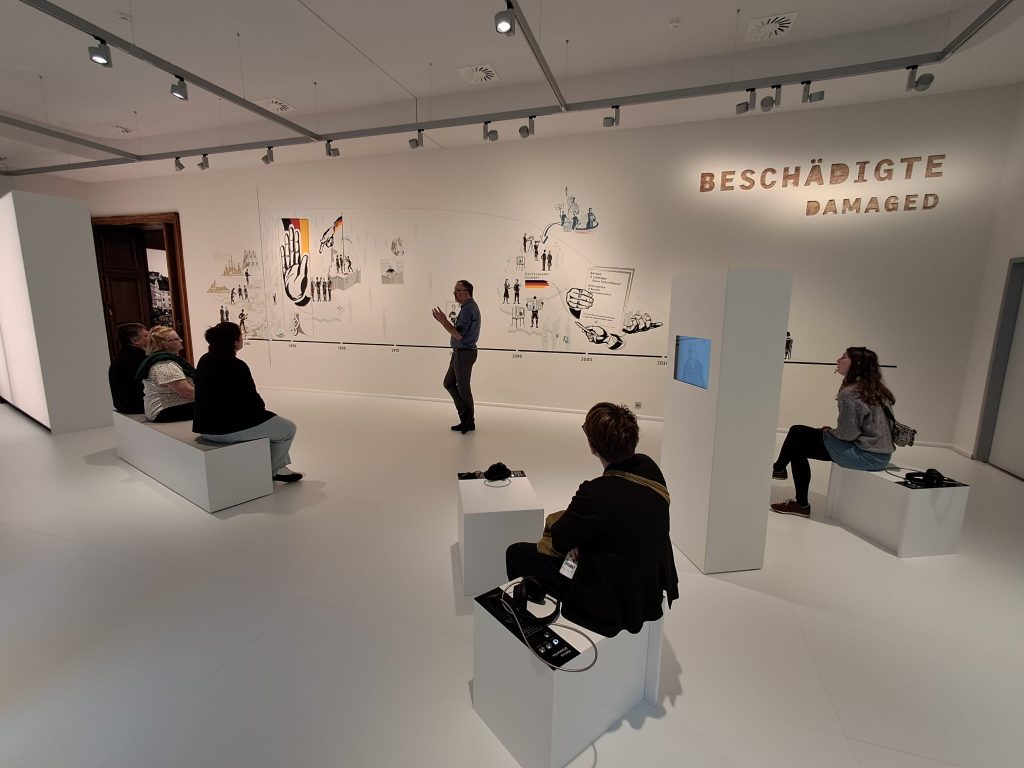
On Sunday, March 23rd, the group visited the Memorial and Educational Centre Andreasstrasse in Erfurt. The former prison building which had also served as an interrogation facility of the GDR secret-police hosts since 2013 the permanent exhibition titled “Prison I Dictatorship I Revolution: Thuringia 1949-1989”. During the guided tour and following discussion, Judith Mayer, Educational Adviser and Vice Director of the center, provided a valuable insight into the history and current activities of the institution. In the afternoon, the participants discovered the capital city of Thuringia through the multimedia city rally under the title “Venues of peaceful revolution in Erfurt”.
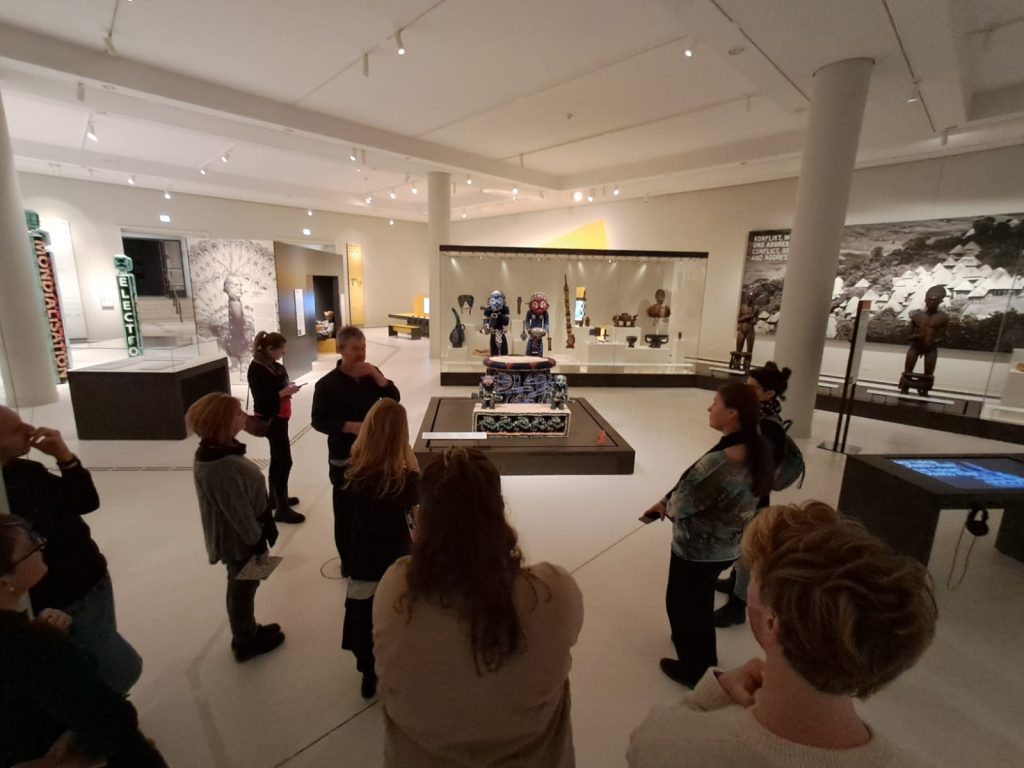
On Monday, March 24th, the program was continued in Berlin. Marc Wrasse, a curator for education and outreach at the Humboldt Forum guided the participants through the recently erected tremendous building in the historical center of the German capital. Following the presentation of history and current activities of the institution, the long-standing public disputes about the building and its surrounding have been briefly brought into focus.
The dealing with the project topic in the Humboldt Forum has been continued during the guided tour “Colonial presence” in the Museum of Ethnology, situated on the second floor of the building. The guided tour offered an interesting insight into the practical outreach and challenges of the decolonization in the museum and beyond.
On Tuesday morning, March 25th, the group visited the Federal Foundation for the Study of the Communist Dictatorship in Germany. Katharina Hochmuth, the Head of the Department for school education, presented the institution, its activities and programs. The participants had a chance to see on the spot the recently published poster exhibition about Women in divided Germany as just one of the numerous activities supported by the Foundation.
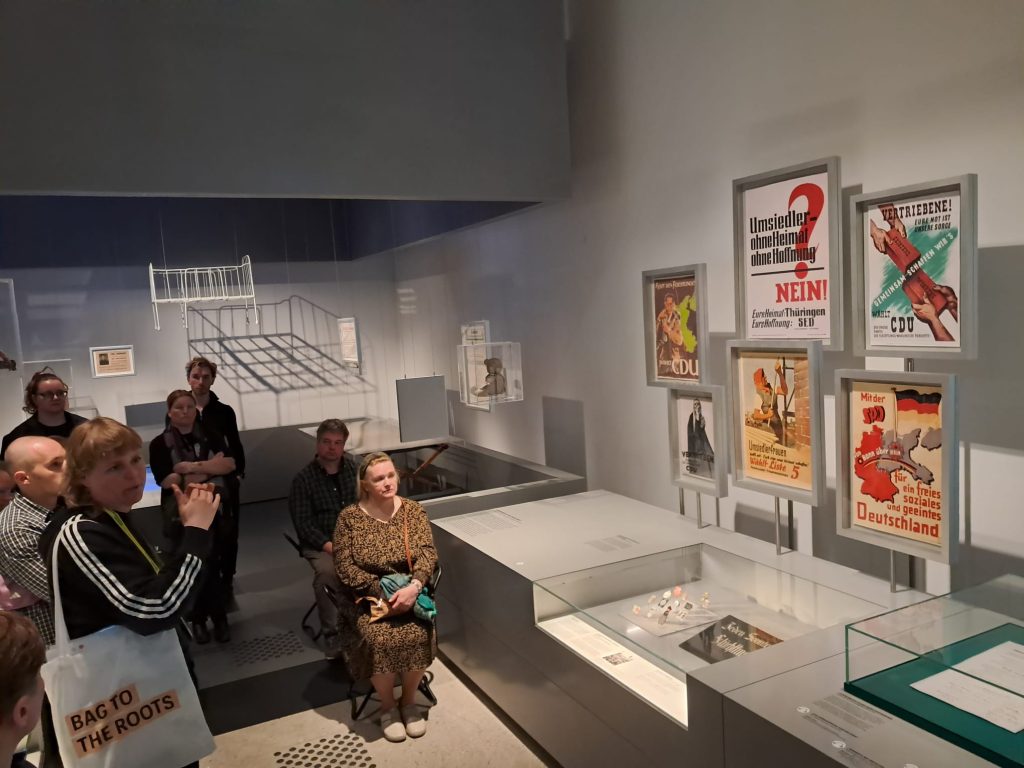
In the afternoon the program was continued with a visit to the Documentation Centre for Displacement, Expulsion and Reconciliation (FVV). The guided tour through the permanent exhibition and the later discussion with the guides offered a place for exchange about one more disputed topic in the German culture of remembrance: the displacement of ethnic Germans from Central and Eastern Europe during and after the Second World War.
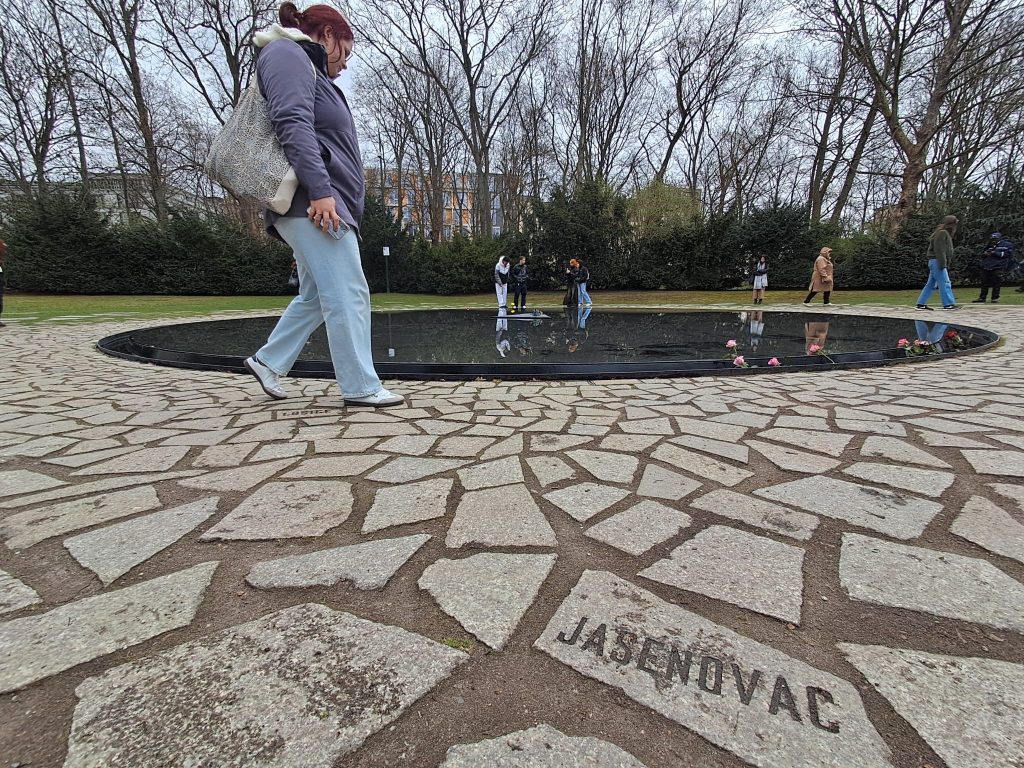
The program on Wednesday, March 26th, started with a visit to the Memorial to the Murdered Jews of Europe. During the introduction session in the documentation centre, Florian Kemmelmeier provided the brief overview of places of remembrance to the victims of the NS regime, situated in the centre of Berlin. In the exhibition, placed in the basement of the Memorial, the participants had a chance to read about the sites of remembrance on the mass atrocities against Jews conducted by the NS regime and its allies all over Europe. During the following guided walking tour “Berlin as a Landscape of Remembrance“, the participants have seen the Memorial to the persecuted Homosexuals under National Socialism and the Memorial to the Sinti and Roma of Europe murdered under National Socialism.
The afternoon-program was continued with a visit to the Federal Agency for Civic Education (BPB), the public authority with a task to provide citizenship education and information on political issues to the public in Germany. Following the brief presentation of the institution in general, the activities of the BPB have been presented on the example of two project-groups. Hannah Zimmerman, Speaker of the project-group “NSU – Documentation Center”, spoke about the endeavor to create the institution dedicated to the contemporary right-wing terror in Germany and its victims as well as to strengthening of their visibility in the German culture of remembrance. Her colleague, Carolin Savchuk, Speaker of the project-group Central-, Eastern- and Southeastern Europe, presented the current activities of the Agency related to the region.
The first event in the frame of the project “European Culture(s) of Remembrance” was closed with a final discussion among participants. After six intensive days of dealing with the German culture of remembrance, the participants had a chance to share their thoughts and impressions. Their feedback indicates the overall satisfaction with the event and their wish to participate in some of the future project events.
The next project event will take place in Croatia from 6th to 12th of September 2025, focusing the Croatian culture of remembrance through the similar approach as during the seminar in Germany. The call for application and the program for Croatia are going to be published in May.
The project “European Culture(s) of Remembrance” is conceptualized and coordinated by Markus Rebitschek (EJBW, Weimar) and Boris Stamenić (Retrovizor, Zagreb). The project is implemented with the financial support of the European Union and the Federal Republic of Germany.
