
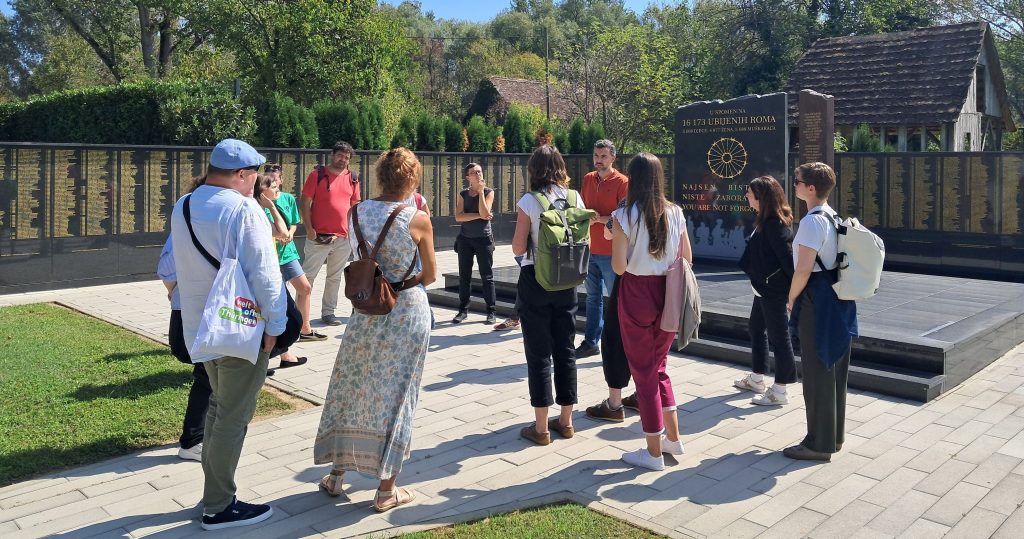
The seminar in Croatia, held from September 6 to 12, 2025, is the second of six planned activities within the international project European Culture(s) of Remembrance, developed in cooperation between the European Youth Education and Meeting Centre in Weimar (EJBW) and the association Retrovizor from Zagreb. The series of six planned seminars in six European countries, which began in Germany in March 2025, will continue next year in the Czech Republic.
The seminars organised under the auspices of the European Culture(s) of Remembrance project combine study visits with scholarly discussions and professional networking among experts in the fields of education and contemporary history. The seminars bring together history teachers, researchers, and representatives of museums, memorial sites, and other institutions focusing on related topics. By engaging intensively with central issues in cultures of remembrance in each host country, the seminars provide insight into local social and political dynamics within Europe. At the same time, the active exchange among participants from across the continent fosters an enhanced understanding of broader European trends as well as critical reflection on the social and political dynamics of their respective home countries.
The second seminar, convened in Croatia from 6 to 12 September, brought together 22 participants from 12 European countries. In line with the project’s objectives, the seminar offered not only an overview of the principal themes shaping Croatia’s culture of remembrance but also an examination of public debates and controversies in this domain. The first part of the programme took place in central Croatia. Following the arrival of participants in Zagreb on Saturday, 6 September, the seminar commenced with introductory activities, a presentation of the programme, and an outline of the thematic framework.
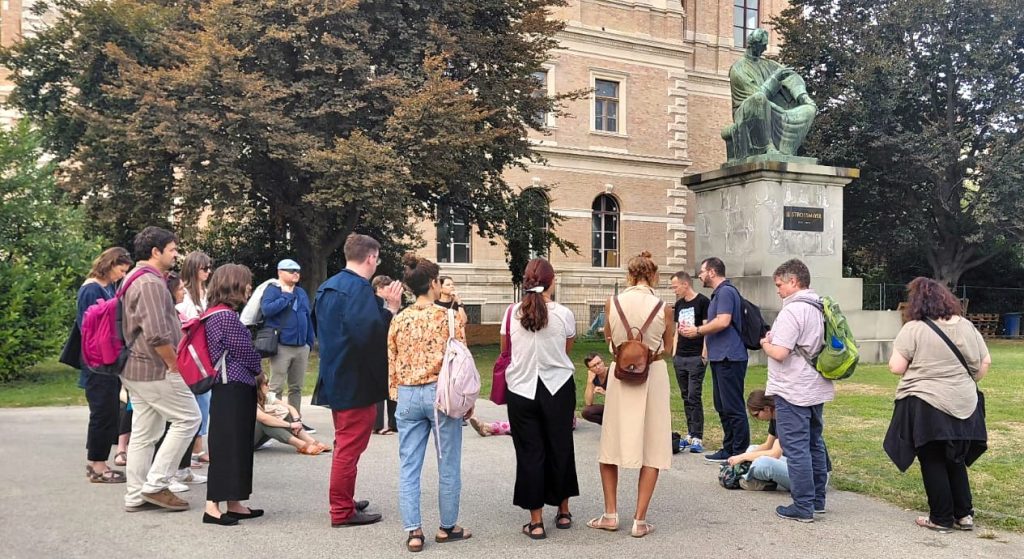
On the following morning, seminar director Dr Boris Stamenić delivered an inaugural lecture entitled Croatia’s Culture of Remembrance, highlighting selected topics from twentieth-century history that remain central to societal polarisation in contemporary Croatia. Particular attention was devoted to recent developments, such as wall murals and popular music, which have emerged as increasingly significant media in remembrance practices and politics. The afternoon programme consisted of a guided tour of central Zagreb, with a focus on monuments in public space and their symbolic role within the culture of remembrance.
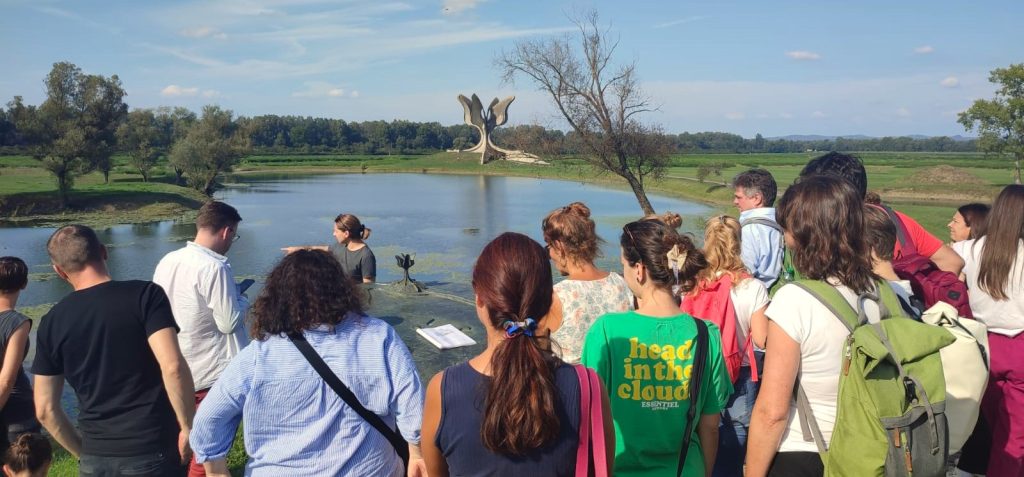
On Monday, 8 September, the programme began with a visit to the Institute of Social Sciences “Ivo Pilar”. After the welcoming address by the Institute’s director, Professor Dr Željko Holjevac, Dr Danijel Vojak, senior research associate and member of the Croatian delegation to the IHRA, delivered a lecture on sites of Roma persecution during the Second World War in the territory of the Independent State of Croatia. Participants further deepened their knowledge of the Samudaripen—the genocide of the Roma during the Second World War—during a visit to the Roma Memorial Centre in Uštica guided by the Centre’s director, Danijel Velić. In the afternoon, the group visited the Jasenovac Memorial Site, followed by reflection and discussion.
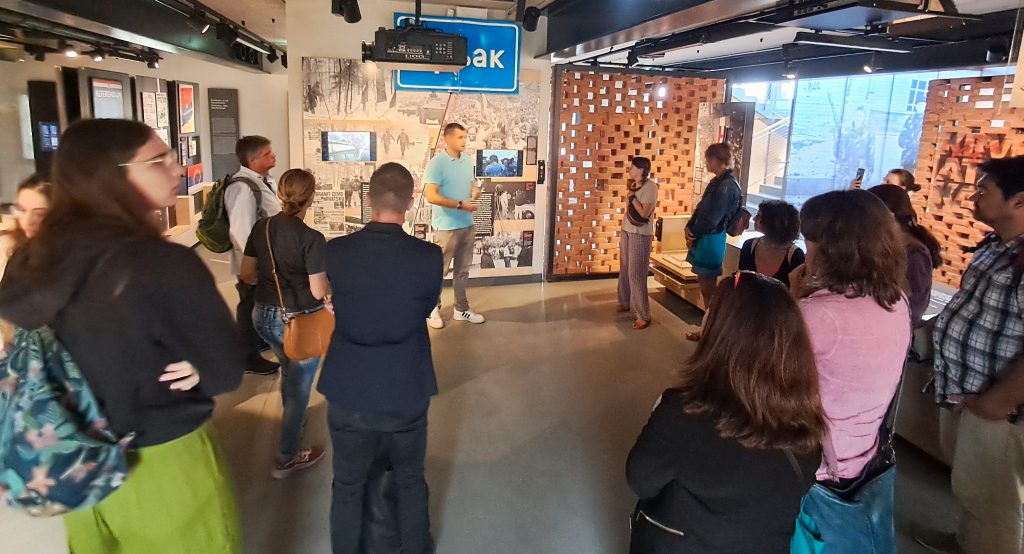
On Tuesday, 9 September, participants visited the Homeland War Museum Karlovac – Turanj. In his introductory remarks, museum director Juraj Horvatin presented the institution’s work with diverse social groups, ranging from school pupils to war veterans. Museum educator Sandro Vidoš subsequently guided participants through the exhibition. Upon arrival in Rijeka later that day, the group engaged in discussion regarding their impressions of the museum, followed by an orientation walk through the city centre of Rijeka.
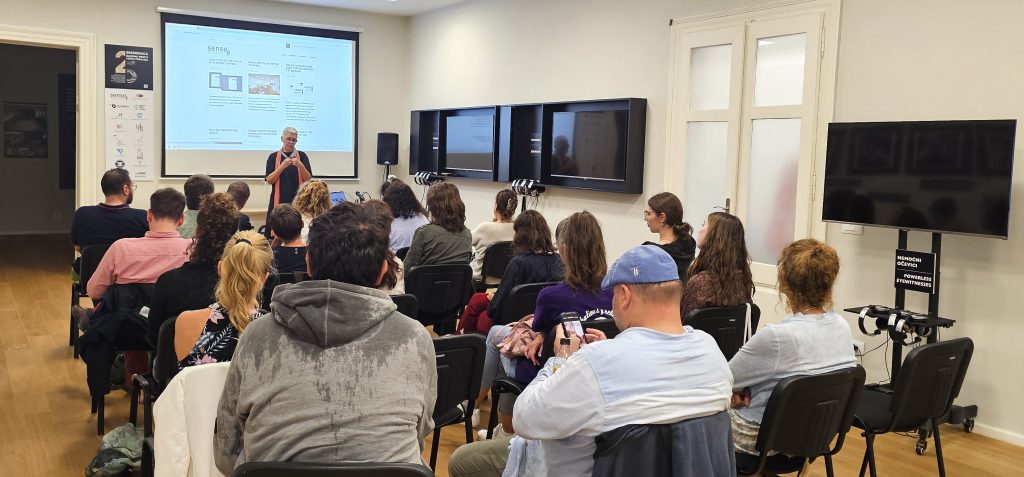
On Wednesday, 10 September, an excursion to Pula was undertaken. The visit focused the local history and regional Istrian remembrance culture within the broader Croatian context. In the morning, participants visited the Monument to the Fallen Fighters and Victims of Fascist Terror on Tito Square, as well as the Historical and Maritime Museum of Istria. In the afternoon, they attended a presentation at the SENSE – Transitional Justice Center, an institution originating from the former news agency that monitored the proceedings of the International Criminal Tribunal for the former Yugoslavia (ICTY). The Center’s director, Mina Vidaković, presented its activities, with particular emphasis on interactive narratives. These narratives are illustrating how crimes committed during the 1990s wars in the former Yugoslavia were investigated and prosecuted by the ICTY.
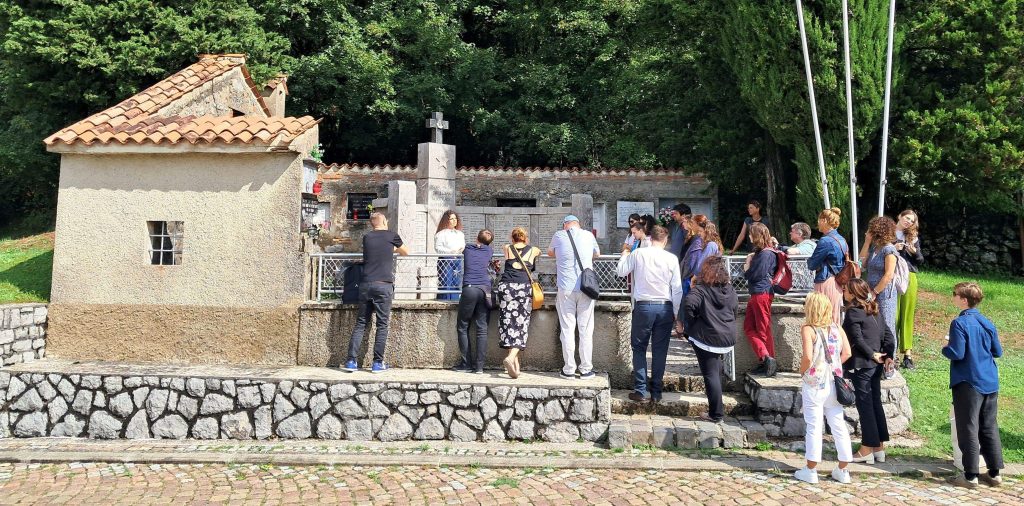
On Thursday morning, 11 September, participants visited the Memorial Centre “Lipa Remembers”. Museum educator Lorena Živković guided them through the exhibition and the village of Lipa, where German, Italian, and Chetnik forces killed 269 inhabitants, including 96 children, on 30 April 1944. The Centre’s director, Vana Gović, presented its ongoing activities, aimed not only at preserving the memory of the massacre victims but also at strengthening of social and cultural activities within the local community.
Upon their return to Rijeka, participants were afforded the opportunity for individual exploration of the city, including visits to the Trsat Castle, taking a look at the Tito’s ship Galeb moored in Rijeka’s harbor, and other sites of interest. The seminar concluded with a final plenary discussion, during which participants reflected on the five intensive days devoted to the study of Croatia’s remembrance culture. Closing remarks indicated a high level of satisfaction with the programme as well as an expressed willingness to participate in future activities. On Friday, 12 September, participants departed for their home countries.
The call for applications for the subsequent seminar within the European Culture(s) of Remembrance project, to be held in March 2026 in the Czech Republic, will be published by the end of the year on the website of the association Retrovizor. A report from the earlier seminar European Culture(s) of Remembrance: Germany in Focus, convened in March 2025, is available via the provided link.
The project European Culture(s) of Remembrance was conceptualised by Markus Rebitschek (EJBW, Weimar) and Boris Stamenić (Retrovizor, Zagreb), and is implemented with the financial support of the European Union and the Federal Republic of Germany.

Comments
One response to “European Culture(s) of Remembrance: Croatia in Focus”
[…] know more about the previous events, here you can find the reports from the seminars in Germany and Croatia, implemented during […]