
From 28 August to 6 September 2026, Weimar hosted the second edition of the International Summer Camp “Youth in Cold-War Europe and beyond”, bringing together 30 young people from five European countries, including Croatia.
Following the inaugural edition held last year, this year’s programme once again explored popular culture in relation to the political context of the second half of the 20th century. Through a series of non-formal educational activities, participants examined what it meant to grow up in Cold War Europe. By looking at both continuities and changes between the Cold War period and the present day, the camp encouraged participants to reflect on the importance of protecting democratic freedoms in contemporary society.
One strand of the programme focused on the ways in which different regimes across Europe sought to shape the attitudes and behaviour of young people during the second half of the 20th century. At the same time, participants explored how young people and youth groups responded to state policies directed at them, what choices were available to them, and what consequences could result from refusing to conform to, or actively challenging, the rules and norms of the time.
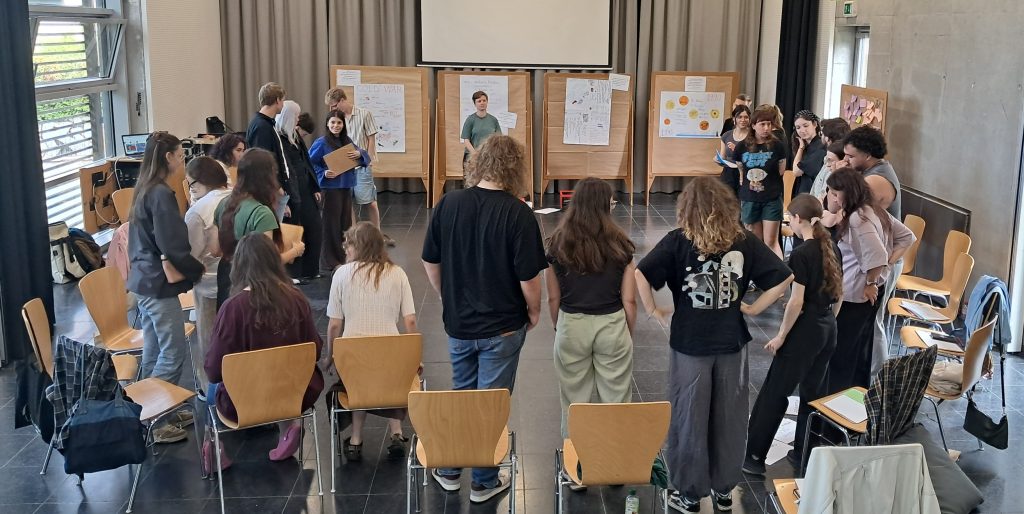
The International Summer Camp opened with a series of activities designed to help participants get to know one another, followed by an introduction to the programme. The opening workshops focused on the key concepts contained in the title of the summer camp, as well as on the historical context surrounding the establishment of the Soviet Occupation Zone (1945–1949) and the German Democratic Republic (1949–1990).
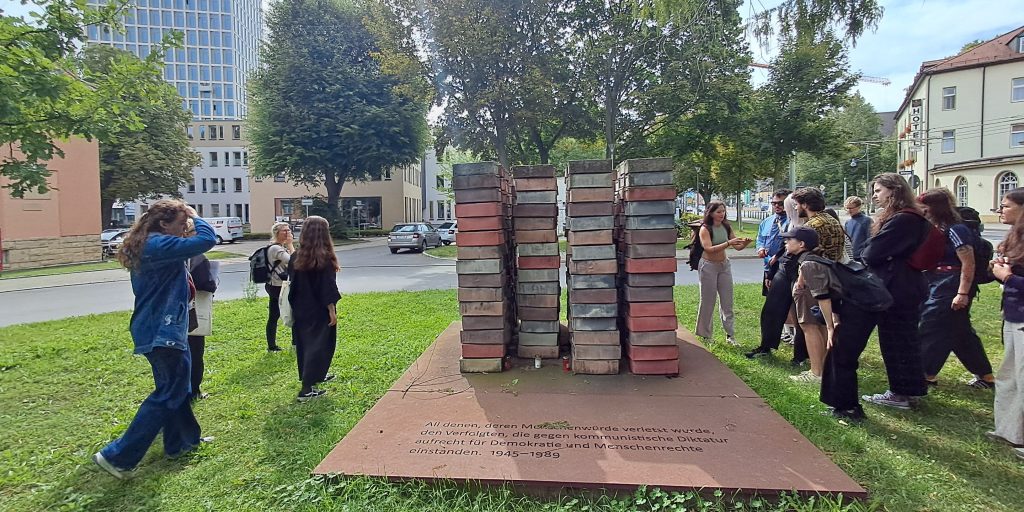
A thematic walking tour of Weimar, focusing on sites connected with the period between the end of the Second World War and the fall of the Berlin Wall, provided participants with an opportunity to explore the Cold War history of Weimar and the wider region of Thuringia.
The screening of the Romanian feature film “Metronom” (2022) offered participants a vivid portrayal of what it was like to grow up in Bucharest in the early 1970s. The story follows a group of school friends who meet one afternoon to listen to their favourite programme on Radio Free Europe. Through their story, the film explores the repressive response of the Romanian communist regime to the growing popularity of Western rock music among young people.
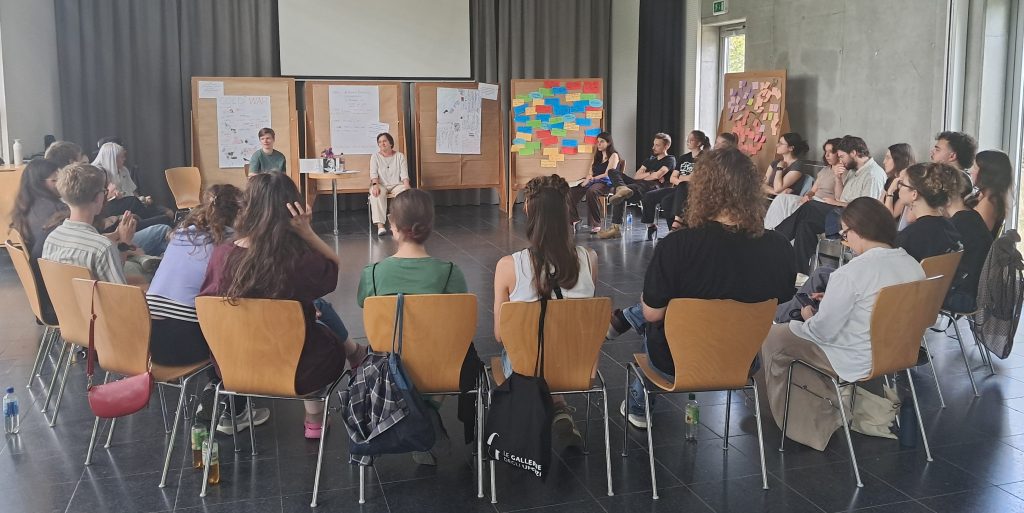
Personal experiences of growing up in the GDR were another important part of the programme. In a conversation with Renate Ellmenreich, an evangelical theologian born in 1950, participants learned more about everyday life and youth culture in Jena during the 1970s. Renate Ellmenreich was involved in evangelical youth work in Jena, where she led a local youth group Junge Gemeinde in the second half of the 1970s. Particular attention was given to her relationship with Matthias Domaschk, her unmarried partner and the father of her daughter.
In April 1981, Domaschke, then 24 years old, was arrested on a train and taken to a remand prison for interrogation. His arrest was based on a suspicion that he had travelled to Berlin with the intention of disrupting a party congress being held there. Two days later, Matthias Domaschk was dead. The authorities’ official explanation that he had committed suicide while in the Ministry for State Security’s remand prison in Gera was never accepted as credible by Renate Ellmenreich and many others.
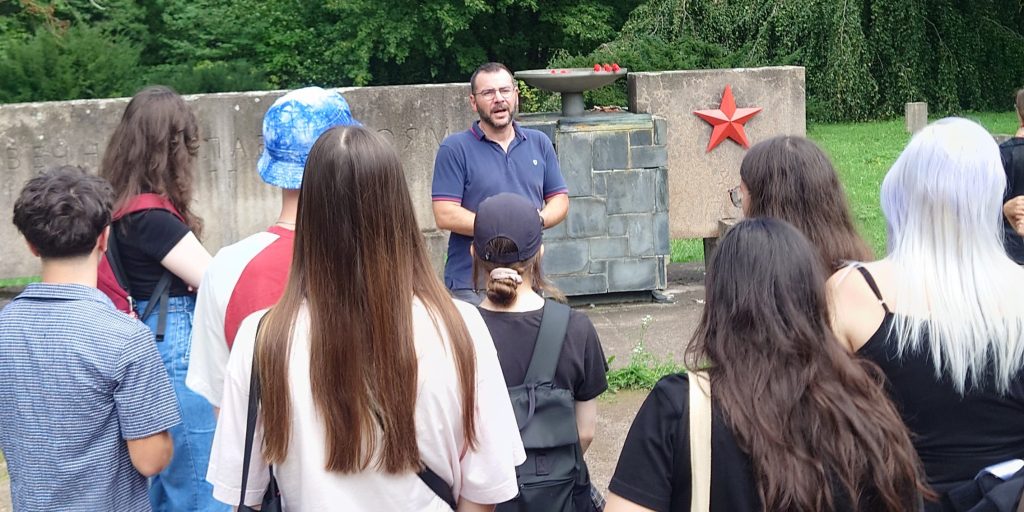
The life of Matthias Domaschk was also at the centre of a thematic tour of Jena. The tour, focusing on youth opposition to the regime in Jena during the 1970s and 1980s, was led by Katharina Kempken from the Thuringian Archive for Contemporary History “Matthias Domaschk”. Participants visited places where Domaschk and his friends used to meet and learned more about the everyday lives and experiences of young people in the German Democratic Republic.
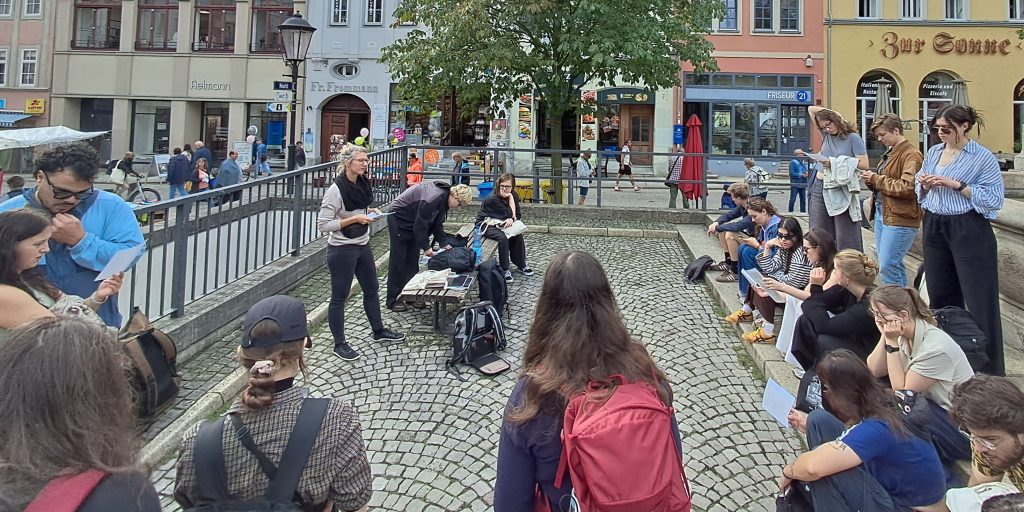
In the afternoon, the group visited the aforementioned archive. The participants explored prepared materials on the punk scene in the GDR, translated lyrics by the local punk groups Katakombo and Airtramp, as well as secret-police reports on the activities of these groups.
The following day, historian Holm Kirsten, born in 1965, spoke about the punk scene in the GDR during the 1980s and the state’s response to youth and subcultures associated with protest and non-conformity. Kirsten also shared his own experiences.
In October 1983, Holm Kirsten and several friends painted graffiti on walls in Weimar. After few days they were arrested for activities considered hostile to the state. Subsequently he spent six months in the Andreasstraße remand prison in Erfurt, run by the Ministery for State Security (MfS).
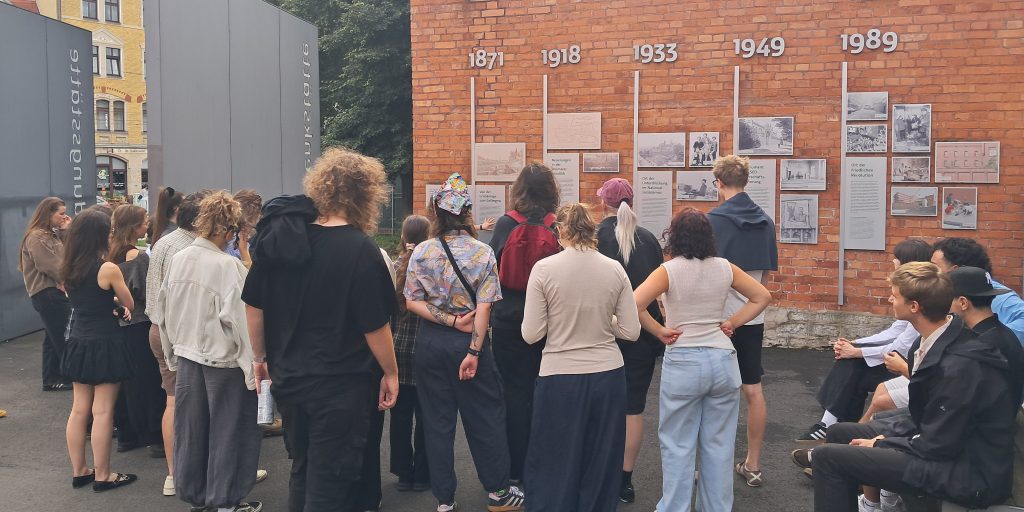
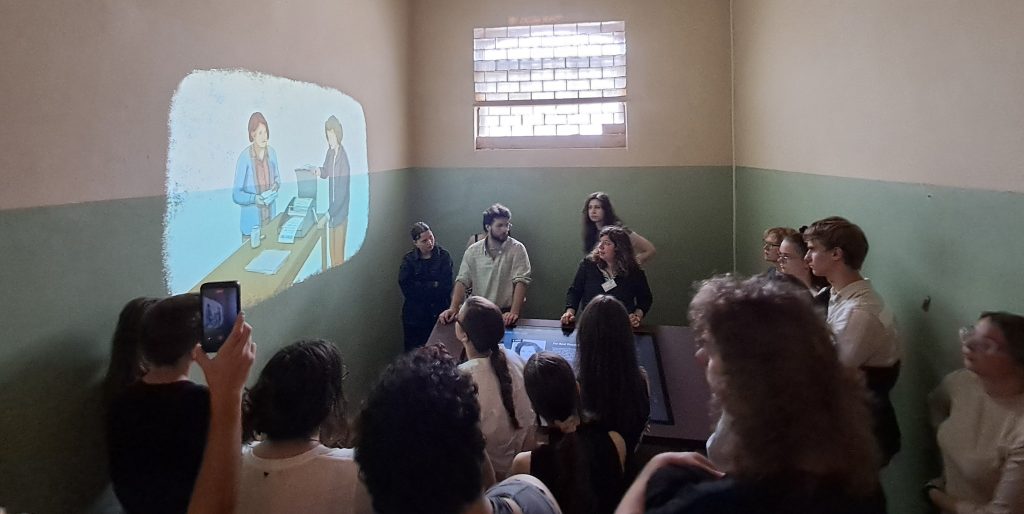
The conversation with Holm Kirsten provided an excellent introduction to the following day’s visit to the Andreasstraße Memorial and Educational Centre in Erfurt. The morning in the capital of Thuringia was dedicated to a guided tour of the former remand prison operated by the Ministry for State Security, the East German secret police commonly known as the Stasi. Between 1952 and 1989, a total of 5,039 people were detained in the Ministry for State Security’s district remand prison in Erfurt, including Holm Kirsten.
Since 2012, the former prison and nowadays Memorial and Educational Centre is housing the permanent exhibition “Imprisonment, Dictatorship, Revolution: Thuringia 1949–1989.” Following the guided tour, Judith Mayer, a member of the Memorial and Educational Centre’s team, answered numerous additional questions from the participants.
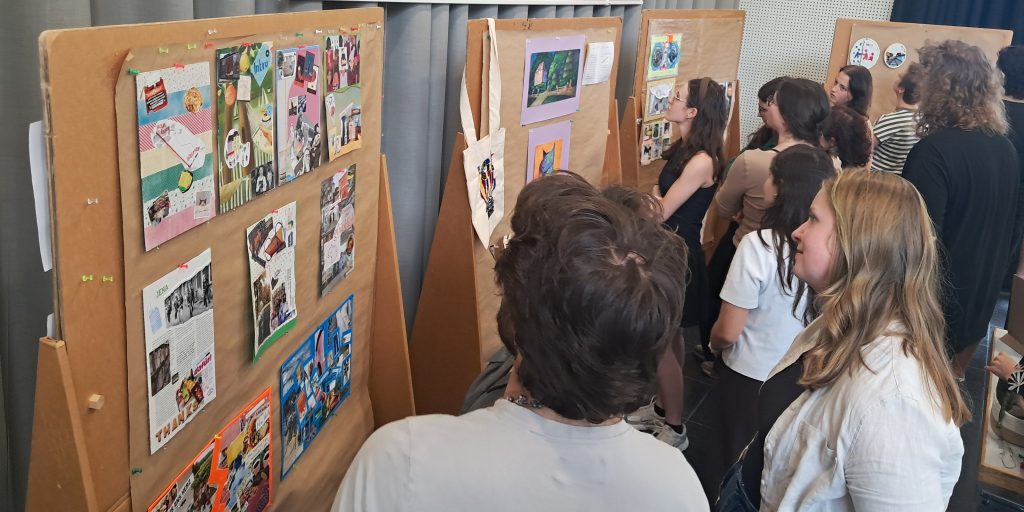
Participants were able to channel the many impressions and impulses gained from the tours and conversations with experts and contemporary witnesses into creative work according to their own interests. They could choose between writing, tapestry-making, drawing, painting and collage-making. Technical support was also available for the creation of digital formats.
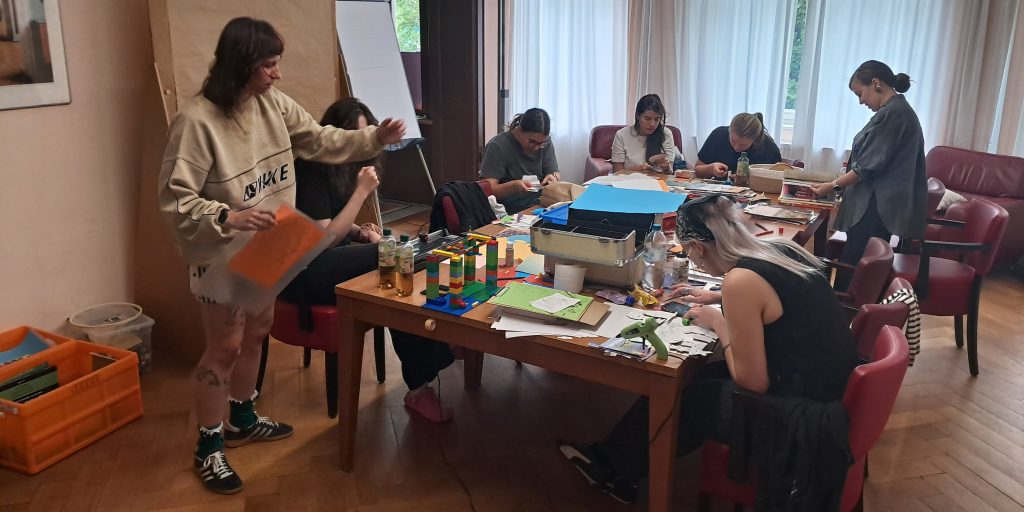
On the final day of the International Summer Camp, participants presented the results of their creative reflections. The artistic scope and diversity of the works produced were truly impressive. The concluding discussion and evaluation demonstrated the participants’ satisfaction with their experience at the International Summer Camp, as well as their interest in taking part in similar activities in the future.
A final party on Saturday evening, with music and karaoke, brought another engaging late-summer gathering in the beautiful city of Weimar to a close.
The International Summer Camp was organised by Retrovizor in cooperation with the European Youth Education and Youth Meeting Centre (EJBW) in Weimar. The programme was designed and implemented by Rebekka Pfennig, Markus Rebitschek and Boris Stamenić. The organisation and implementation of the camp were supported by the partner organisations Antikomplex from the Czech Republic and Dinamo Sintra from Portugal.
The International Summer Camp was made possible with financial support from the European Union and the Federal Republic of Germany.
